
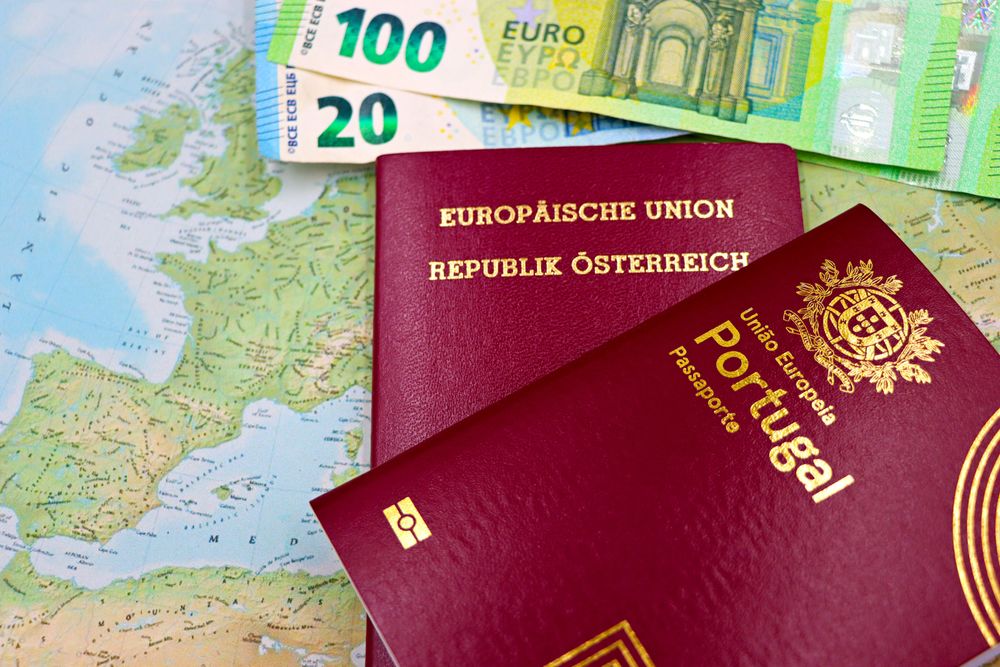
ETIAS & EES Explained: EU Travel Requirements Guide
EES biometric checks already run at Schengen borders, and the €20 ETIAS authorisation for visa-exempt travellers is expected in late 2026. What each system does and how to prepare.
Europe's borders are going digital, and the change affects every non-EU traveller — including the roughly 60 nationalities who never needed paperwork before. The Entry/Exit System (EES) already replaced passport stamps with fingerprints and facial images at Schengen borders, and ETIAS, a €20 pre-travel authorisation for visa-exempt visitors, is expected to follow in the last quarter of 2026. Here is exactly what each system does, who it applies to, and how to prepare without falling for the copycat websites already charging for it.
Fast Facts
| Detail | Info |
|---|---|
| Who needs ETIAS | Visa-exempt nationals of 59 countries and territories — including the UK, US, Canada, Australia and Japan — visiting any of 30 European countries for short stays (official list) |
| ETIAS fee | €20, paid online; free for applicants under 18 or over 70 and for family members of EU nationals (official fee page) |
| ETIAS validity | 3 years or until your passport expires, whichever comes first; unlimited entries within the 90/180-day rule |
| ETIAS status | Not yet in operation (August 2026); expected to start in the last quarter of 2026, exact date to be announced several months in advance |
| EES status | Fully operational since 10 April 2026 after a progressive rollout that began 12 October 2025; registration is free |
| Where it applies | EES: 29 European countries (Schengen area incl. Bulgaria and Romania). ETIAS: those 29 plus Cyprus. Ireland is covered by neither |
What is the EES (and what happens at the border now)
The Entry/Exit System (EES) is an automated IT system that registers non-EU nationals every time they cross the external border of 29 European countries — the full Schengen area, from Austria and France to Norway, Switzerland and Iceland. According to the European Commission, the system started on 12 October 2025 with a progressive rollout and became fully operational on 10 April 2026. As of that date, EES fully replaces manual passport stamping and automatically detects travellers who overstay.
The EES applies to all "third-country nationals" travelling for a short stay — up to 90 days in any 180-day period — whether they need a visa or not. A UK citizen on a weekend in Paris and an Indian national with a Schengen visa are both registered in the same system. The record holds your name, travel document data, fingerprints, a facial image, and the date and place of each entry and exit.
Here is what the official EES site says happens in practice:
- First crossing since EES started: you provide personal data at the border, an officer takes a photo of your face and/or scans your fingerprints, and a digital file is created. Your passport is not stamped. Registration is free — gov.uk confirms "there is no cost for EES registration".
- Subsequent crossings: your biometrics are already on file, so officers only verify your fingerprints and photo — noticeably faster. Travellers with biometric passports can often use self-service gates, and where the digital file is clear, may not need to see an officer at all.
- Pre-registration: some border points offer self-service kiosks, and countries may offer a mobile app to submit data in advance. At UK departure points with juxtaposed French controls, Eurostar operates self-service pre-registration kiosks and Eurotunnel has a purpose-built pre-registration area.
Two important exceptions: Cyprus and Ireland are EU members but do not use the EES — passports there are still stamped manually, and days spent in either country are counted separately from your Schengen 90/180 allowance.
What is ETIAS and who needs it
The European Travel Information and Authorisation System (ETIAS) is the second half of the EU's border modernisation — a pre-travel authorisation, not a visa, for travellers who currently enter Europe visa-free. Think of it as the EU's equivalent of the US ESTA or the UK's ETA.
The distinction from the EES matters and is worth stating plainly:
- EES happens at the border and applies to all non-EU nationals on short stays, visa or no visa.
- ETIAS happens before you travel and applies only to visa-exempt nationals — people who board a plane to Europe today with nothing but a passport.
According to the official who-should-apply list, nationals of 59 visa-exempt countries and territories will need ETIAS — the United Kingdom, United States, Canada, Australia, Japan, South Korea, Brazil, New Zealand, the United Arab Emirates and Ukraine among them. It will be required for travel to 30 European countries: the 29 EES countries plus Cyprus.
Crucially, ETIAS is not yet in operation. The official EU site states, as of August 2026: "ETIAS is currently not in operation and no applications for travel authorisations are collected at this point." The European Commission's April 2026 notice to UK nationals says the requirement starts "from the last quarter of this year", and the EU has committed to announcing the specific date several months before launch. Any website claiming to sell ETIAS today is not selling anything real.
Once live, an approved ETIAS is valid for 3 years or until the passport used in the application expires — whichever comes first. It allows unlimited short stays within the standard 90-days-in-any-180 limit, and it is electronically linked to your passport: get a new passport and you need a new ETIAS.
Who is exempt? EU citizens and Irish nationals obviously, but also holders of residence permits or residence cards issued by an ETIAS country, nationals of Andorra, Monaco, San Marino and the Vatican, and — significantly for British readers — UK nationals who are beneficiaries of the Withdrawal Agreement holding the uniform-format residence document (with specific carve-outs for documents issued by Ireland and Cyprus).
How to apply for ETIAS (step by step)
When applications open, there will be exactly two official channels: the official website at travel-europe.europa.eu/etias and the official ETIAS mobile app. The process, per the official application guide:
- Check your passport. It must be valid for at least 3 months beyond your intended departure from Europe and be less than 10 years old.
- Fill in the online form. You will be asked for personal details (name, date and place of birth, nationality, home address, parents' first names, email, phone), travel document data, your level of education and current occupation, details of your intended stay, and security questions covering criminal convictions, past travel to war or conflict zones, and any previous orders to leave a country.
- Pay the €20 fee by payment card. Applicants under 18 or over 70 pay nothing, nor do family members of EU nationals who qualify under free-movement rules. Applications for minors must be submitted by a parent or legal guardian.
- Wait for the decision by email. Most applications are processed within minutes; if not, a decision comes within 4 days. That can stretch to 14 days if you are asked for extra documents, or 30 days if you are invited to an interview — which is why the EU advises applying before booking flights or accommodation.
- Check every detail on approval. If the name or passport number on your authorisation contains an error, you will be refused boarding or turned back at the border.
Beware of copycat sites. The EU's own report-abuse page warns that commercial intermediaries may "mislead applicants into believing that their site is the official channel", charge "an unreasonably high price", or fraudulently reuse the personal and financial data you hand over. There is one official website and one official app; the real fee is €20, full stop. If a site charges €50-€80 "processing", you are paying a third party for a form you could complete yourself in minutes — and trusting them with your passport data.
EES + ETIAS for UK travellers specifically
Brexit turned UK passport holders into third-country nationals, which is why both systems now apply to them in full.
EES — already in force. Since October 2025, British travellers entering the Schengen area register fingerprints and a photo at the border on first entry; gov.uk guidance confirms no advance action is needed and registration is free. For Eurostar, Eurotunnel and Dover crossings, French border checks (and EES registration) happen on UK soil before departure, using dedicated kiosks and pre-registration zones.
ETIAS — coming next. Per the EU's notice for UK nationals, from the last quarter of 2026 UK citizens will need an ETIAS authorisation before travelling, and carriers will check it before boarding — explicitly including "trains departing from the UK" and ferries such as Dover–Calais. The EU compares ETIAS directly to the UK's own Electronic Travel Authorisation, which EU citizens already need to visit Britain: the traffic now flows both ways.
Notable UK-specific points from the official pages:
- Every family member needs their own ETIAS — a family of four pays €40 total (two adults at €20; children under 18 are fee-exempt but still need the authorisation).
- Withdrawal Agreement beneficiaries with a uniform-format residence document from an ETIAS country are exempt; those holding documents issued by Ireland are not exempt, and Cypriot documents only exempt travel to Cyprus itself.
- Ireland remains entirely outside both systems for UK travellers thanks to the Common Travel Area.
Timeline: what applies when
- 12 October 2025 — EES began operating, with a progressive rollout across border crossings (European Commission).
- 10 April 2026 — EES fully operational at all external borders of the 29 participating countries; passport stamping ended, overstay detection is automatic.
- Today (August 2026) — EES applies to every non-EU short-stay traveller. ETIAS does not exist yet as a live system; no application is possible, nothing needs to be done.
- Last quarter of 2026 (expected) — ETIAS is due to start, per the European Commission; the confirmed date will be announced months in advance on the official site. EU legislation also foresees a transitional period after launch before the requirement is enforced in full — the exact arrangements will be published with the start date.
The practical takeaway: if you travel before ETIAS goes live, the only change you will notice is the EES biometric check. Once ETIAS launches, add one online form and €20 to your pre-trip checklist — and treat any earlier "deadline" you see on a commercial website as marketing.
How this affects multi-country trips
Neither system changes the arithmetic of the Schengen 90/180 rule — but the EES changes its enforcement. Your 90 days in any 180-day period are calculated as a single allowance across all 29 EES countries, and where a smudged stamp once left room for doubt, the system now computes your balance to the day and flags overstays automatically. A multi-country rail itinerary through five Schengen countries counts against one clock, and only your entries and exits from the area as a whole are registered — internal Schengen borders remain check-free.
Three planning consequences:
- Count your days precisely. The 90/180 window is rolling, not calendar-based. The EU provides a short-stay calculator, and the EES means the border already knows your answer before you do.
- Cyprus is a separate pot. Days in Cyprus do not count towards your Schengen 90 — the official ETIAS site confirms Cypriot stays "will be calculated separately". The same goes for Ireland.
- One ETIAS covers the whole trip. A single authorisation is valid for all 30 countries for 3 years — you do not apply per country or per trip. But it must remain valid for your entire stay, and you must carry the same passport you applied with.
Common mistakes and how to avoid them
- Paying a third-party site for ETIAS. The most expensive mistake available today, because ETIAS cannot even be applied for yet. Bookmark the official site and ignore ads. If you have been caught out, the EU's report-abuse page explains how to flag it.
- Assuming ETIAS is a visa or guarantees entry. It is neither. Border guards still verify entry conditions on arrival — proof of funds, onward travel, purpose of stay — and can refuse entry to someone with a valid ETIAS.
- Applying with a passport about to expire. Your ETIAS dies with your passport, and the passport itself must be valid 3 months beyond departure and issued within the last 10 years. Renew first, then apply.
- **Booking non-refundable travel before authorisation arrives.The EU's own checklist says: apply "before you buy your ticket or book your accommodation".
- Forgetting the children. Under-18s skip the €20 fee, not the requirement. Every traveller, including infants, needs their own ETIAS once the system is live.
- Mixing up where each system applies. EES and ETIAS cover Schengen (plus Cyprus for ETIAS) — not Ireland. And non-Schengen destinations like the UK have their own separate schemes.
Europe is not becoming harder to visit — it is becoming harder to visit carelessly. Register your biometrics once, count your 90 days, spend your €20 on the official site and nowhere else, and the continent's borders will barely slow you down.
Frequently Asked Questions
How much does ETIAS cost and who pays?
The application fee is €20, set by the European Commission in 2025 (raised from the originally planned €7). It is paid online by card at the moment of application. Applicants under 18 or over 70 are exempt, as are family members of EU nationals who qualify under free-movement rules — though all of them must still obtain the authorisation itself, which in their case is free.
When does ETIAS actually start?
As of August 2026, ETIAS is not in operation and no applications are being accepted. The European Commission's official communications point to a start in the last quarter of 2026, and the EU has committed to announcing the precise date several months in advance on travel-europe.europa.eu. A transitional period after launch is also foreseen before full enforcement. Treat any site claiming you can or must apply now as fraudulent.
How long is an ETIAS valid, and does it limit my trips?
An approved ETIAS is valid for 3 years or until the passport you applied with expires, whichever comes first. Within that window you can enter the 30 participating countries as often as you like, provided each stay respects the 90-days-in-any-180 short-stay limit. If you renew your passport, you must apply for a new ETIAS linked to the new document.
Do UK citizens need both EES and ETIAS?
Yes. EES already applies: UK passport holders register fingerprints and a photo when entering the Schengen area (at Eurostar, Eurotunnel and Dover, this happens at kiosks before departure). Once ETIAS launches — expected late 2026 — UK nationals will also need the €20 pre-travel authorisation, checked by carriers before boarding planes, ferries and trains to the continent. Ireland requires neither. Withdrawal Agreement beneficiaries with qualifying residence documents are exempt from ETIAS.
Do children need their own ETIAS, and what about the biometrics at the border?
Every traveller needs an individual ETIAS regardless of age — but under-18s pay no fee, and a parent or legal guardian must submit the application on their behalf. At the border, children are registered in the EES like adults; gov.uk notes travellers may be asked for fingerprints and a photo on arrival, with specific procedures varying by age and border point.

Keep Exploring

Bernina Express or regional: Milan trips and scenic stops
Choose the Bernina Express or regional trains for a Milan day trip, a Swiss transfer or stops at Alp Grüm and Poschiavo. Compare tickets, reservations and autumn diversions.

Scenic Trains in Switzerland: Routes, Passes and Prices
Explore top Swiss scenic trains like Glacier Express and Bernina. Get 2026 prices, pass comparisons, reservation tips, and a sample 5-day itinerary.

London to Amsterdam by Train: Complete Eurostar Guide
The complete guide to the London–Amsterdam Eurostar: 4h19 direct from £39, check-in at St Pancras and Amsterdam Centraal, booking windows, Interrail and alternatives.