
Werribee Open Range Zoo: Safari and Elephant Trail
Plan Werribee Zoo from Melbourne: included safari bus, separate Elephant Trail, tickets, child offers, accessible routes and train-plus-bus travel.
Choose Werribee Open Range Zoo for a day that combines the included safari bus with walking trails, rather than treating it as a quick animal stop outside Melbourne. The bus and the Elephant Trail are separate experiences. Plan both deliberately, because different last departures and trail closing times matter even while the zoo remains open.
Allow roughly four to six hours at the zoo as an editorial estimate, plus the journey from your accommodation. Our Melbourne culture and neighbourhood guide covers city-based alternatives; this guide explains when a western wildlife outing deserves its own day and how to avoid buying unnecessary extras.
Fast facts
| Detail | Planning information |
|---|---|
| Location | K Road, Werribee South, about 35 km west of central Melbourne |
| Zoo hours | Daily 09:00–17:00; last zoo entry 15:30 |
| Adult admission | Advertised from A$58; final price depends on selected date |
| Children aged 4–15 | Weekdays from A$29; free weekends and eligible Victorian holidays |
| Children aged 0–3 | Free |
| Standard safari bus | Included with admission; cannot be pre-booked |
| Published bus departures | Regular services until 15:30; check the day's schedule on arrival |
| Elephant Trail | 09:30–16:15; last entry 15:45 |
| Public transport | Werribee Line train, then bus 439 towards Werribee South |
Details were checked on 19 November 2026 against Zoos Victoria's ticket information. “From” prices are advertised entry points, not a quote for a particular date. Amounts are Australian dollars, and the actual euro cost depends on payment conversion. Suggested visit lengths exclude transport and are not guaranteed queue times.
Decide whether Werribee is the right zoo outing
The open-range setting and guided bus are the distinctive reason to choose Werribee. It combines seated observation across larger habitats with walking sections where you control the pace. This suits travellers who want a substantial wildlife day and are willing to leave central Melbourne for it.
Do not confuse Werribee Open Range Zoo with Melbourne Zoo. They are different places with different travel plans. Selecting the right location in the ticket flow is especially important if you have saved a general Zoos Victoria link or are buying several activities together.
A zoo visit is also different from seeing animals in the wild. Use the commentary and interpretation to understand animal care and conservation, while allowing animals to move, rest or remain out of view. Admission does not buy a guaranteed pose, feeding moment or sighting of every listed species.
For a short Melbourne stay, ask what the zoo replaces. If wildlife is a main interest, giving it a full day can be worthwhile. If you mostly want city food, galleries and neighbourhoods, an ambitious zoo transfer squeezed between those priorities may leave too little time for either.
Buy admission before considering upgrades
The official price page advertises adult admission from A$58. Select your travel date before finalising the budget. A “from” price should not be multiplied into a supposedly fixed family total without checking the actual adults, children and concessions in the basket.
Children aged four to fifteen are free on weekends, Victorian Government school holidays and public holidays; ordinary weekday admission is advertised from A$29. Children aged zero to three are free. The ticket page requires children benefiting from the offer to be accompanied by an adult or someone aged at least sixteen. Check the Victorian calendar, not the school holiday dates of your home country.
Reduced senior and concession categories have their own eligible cards. An overseas visitor should check the published documentation rather than assume age alone qualifies for an Australian senior-card rate. Complete the booking for the people and categories actually attending, including any required free child entries.
General admission already includes the standard safari bus. A premium safari or animal encounter is an optional separate product, not a necessary charge to see the open-range area. Compare what an upgrade changes: group size, route, access, timing and any admission exclusion. Buy it only if those differences match your interest.
Make the included safari a fixed priority
The dedicated safari-bus page confirms that the standard tour is included with entry and runs daily. It lists regular departures until 15:30, while another habitat page has shown a slightly later time. Use the earlier limit for planning and ask at Safari Station or the ticket office for the actual day's departures.
The free bus cannot be booked in advance. A zoo entry reservation therefore does not reserve a specific bus seat or departure. On arrival, check the queue and operating information before committing to a long walking loop. If the safari is your main reason for coming, do not leave it until the final part of the afternoon.
The tour takes you through open habitats with commentary about animals including giraffes, rhinos, zebras and antelope. Listen for how the species use space and how conservation concerns differ, rather than treating the ride solely as a sequence of photographs. Where animals stand on the day is not controllable by your preferred seat.
Keep cameras and belongings secure and follow staff instructions. Families should organise toilets, water and any child needs before boarding, rather than assuming the bus functions like a hop-on, hop-off shuttle. The safari is a guided circuit; it is not transport between every walking attraction.
Plan the Elephant Trail separately
The Elephant Trail's own information lists opening from 09:30 to 16:15, with last entry at 15:45. It describes a 21-hectare habitat and a visit reached through the Waterhole Trail. This is a separate walking component, not an elephant sighting promised from the standard safari bus.
Give the approach and observation time their own place in the day. The official visitor map's complete Waterhole-and-Elephant route allows substantially more walking than a brief stop at one viewing window. Ask staff for the current route and allow extra time for pauses, children or mobility needs rather than treating the first elephant viewpoint as the entire experience.
Choose a patient viewing approach. Look at how animals use different parts of the habitat and read the interpretation about care and behaviour. Do not promise children that elephants will swim, appear together or approach a particular barrier. The habitat's size and animals' choices are part of the experience.
A separately priced behind-the-scenes elephant experience is different from ordinary trail access. Check whether zoo admission is included in any premium booking; the Elephant Experience page explicitly excludes zoo entry. An early encounter may also have its own meeting time and minimum age, so it cannot be casually added after arrival.
Use the remaining trails selectively
After choosing the safari and elephant visit, decide how much walking energy remains. The African Trail and Australian Trail offer different interests; take the current map and select a manageable sequence rather than crossing the zoo repeatedly to chase every talk.
The African Trail description identifies animals such as lions, hippos, cheetahs and gorillas. Use it to choose a focus, but treat published species lists as a description of the collection rather than a guarantee that every animal is visible at your arrival time.
For families, intersperse viewing with food and play breaks. A smaller number of attentive stops is often more satisfying than an exhausted final circuit. If an animal is resting out of sight, move on or return when your route naturally allows; repeated demands for activity do not improve the visit.
Keep behind barriers and do not feed animals or free-roaming birds. Photography works best as observation: avoid noise intended to make an animal turn around, and keep viewing areas usable for others. Ask staff about current talks if you want explanation rather than relying on an old timetable screenshot.
Reach the zoo with a realistic return journey
The official directions place the zoo about 35 km west of central Melbourne and list free visitor parking. The advertised thirty-minute drive is an indicative route description, not a reliable guarantee from every hotel or in peak traffic. Add time for the road conditions and entry process.
Public transport uses a train on the Werribee Line to Werribee station, followed by bus 439 towards Werribee South. Plan both legs for the date and direction of travel. Arriving at Werribee station is not the same as reaching the zoo entrance, and the bus connection can shape your day more than the train ride alone.
Check the return bus before setting off and again before leaving the final trail. A long wait late in the day can be frustrating for children or anyone tired from walking. This guide does not quote a single public-transport fare or guaranteed journey duration; use the official journey planner for your origin and applicable ticket rules.
Do not plan around the free visitor shuttle trial advertised in older material. The zoo's dedicated directions page states that the trial ended after its April–June 2025 operation. A previous free service is not a current transport option simply because an old page remains searchable.
Match accessibility and timing to your priorities
The zoo's accessibility page describes wheelchair-accessible safari buses and asks visitors to identify their requirements to staff. It also details capacity limits and an accessible buggy serving the elephant area. Contact the zoo before the visit if equipment size, transfers or assistance will determine whether the day works.
The ordinary safari and premium vehicles do not necessarily have identical access arrangements. Ask about the exact product you have selected, not simply whether “the zoo is accessible.” Confirm the path, boarding method and any reservation needed for equipment hire or volunteer-assisted tours.
The operator describes weekday late afternoons as typically quieter, but that can conflict with safari departures and Elephant Trail last entry. A quieter arrival is not automatically the best choice if you want both experiences. Weigh sensory needs alongside the actual operating windows and ask staff for a practical sequence.
Bring layers, sun protection and water, checking the forecast before departure. A seated safari does not make the rest of the zoo an indoor activity. Leave space for meals and breaks instead of assuming the closing time is a target you must reach after completing every trail.
Build a day with a clear stopping point
For a balanced first visit, arrive in the morning, check the safari arrangement, then fit the elephant walk around that information and a meal break. Use the remaining time for one or two trail priorities. This is an editorial sequence, not a reserved programme: animal care, weather and daily operations can change it.
Our three-day Melbourne itinerary helps decide what to move when adding the zoo. Avoid attaching a complete Werribee visit to a rushed Great Ocean Road excursion just because both lie west of Melbourne. Each needs its own travel and observation time.
Before leaving, confirm the return transport and choose a final stop near the exit route. Ending with attention and energy remaining is preferable to missing a connection because one more distant exhibit appeared on the map. The successful day is the one built around your priorities, not the number of species counted.
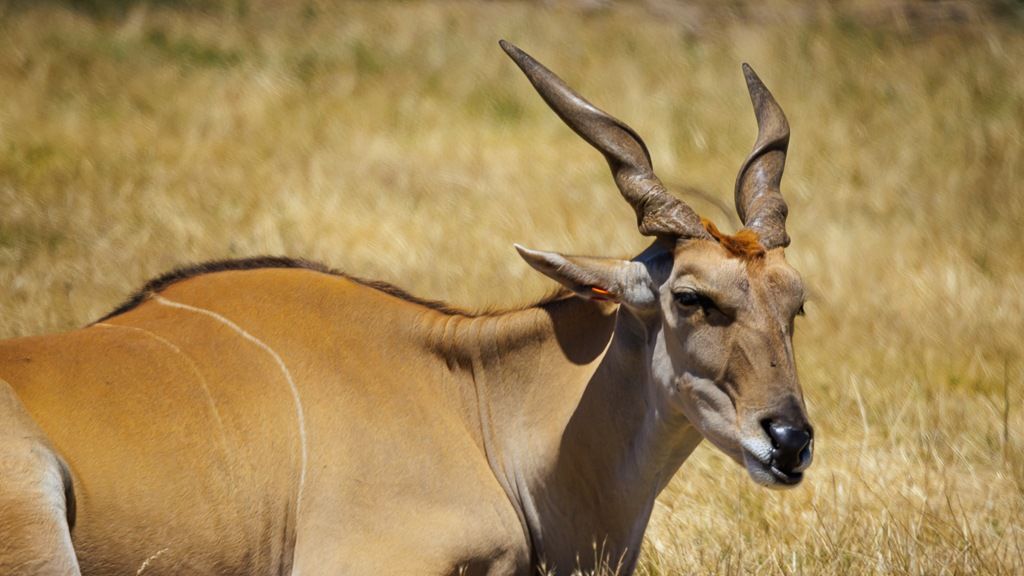
Cover photograph: An eland resting in dry grass at Werribee Open Range Zoo — Eland photographed at Werribee Open Range Zoo in December 2021; cropped to 16:9. Current animal locations may differ. — Andrew Arch, CC BY 2.0.
Frequently Asked Questions
Is the Werribee safari bus included in admission?
Yes. The standard safari is included and cannot be reserved in advance. A zoo ticket does not allocate a particular departure. Check the queue and daily schedule on arrival; the dedicated page lists departures until 15:30.
Are elephants seen on the standard safari bus?
Plan the Elephant Trail as a separate walking visit, reached via the Waterhole Trail. Its published hours are 09:30–16:15, with last entry 15:45. Do not rely on the bus to replace that visit.
When do children enter free?
Ages zero to three are free. Ages four to fifteen are free on weekends and eligible Victorian Government school and public holidays, with the required accompaniment. Ordinary weekday tickets are advertised from A$29; check your actual date.
Can you reach Werribee Zoo without a car?
Yes. Take a Werribee Line train to Werribee station and bus 439 towards Werribee South. Check both directions and connections. The separate free visitor shuttle trial ended in June 2025 and should not be used as a current plan.


Keep Exploring
Night Safari Singapore: Plan Your Evening Visit
Plan a Night Safari evening around the tram, walking trails and presentation bookings, with current exhibit restrictions and a realistic return journey.
Healesville Sanctuary: Plan a Wildlife Day
Plan a Healesville wildlife day with transport, child admission conditions, bird presentations and separate animal experiences.
Chinese Garden of Friendship Sydney: Visit Guide
Plan a garden walk, guided introduction or family visit in Darling Harbour, with accessible-route choices, current activities and exhibition limits.