
Brooklyn Botanic Garden: Choose Your Seasonal Visit
Choose Brooklyn Botanic Garden routes, cherry blossom timing, current winter admission and accessible entrances, with practical seasonal advice.
Brooklyn Botanic Garden rewards choosing a season and a few collections before choosing a route. Come for flowering cherries and you will want a different visit from someone interested in regional habitats, rose varieties or the structure of a Japanese garden. A successful afternoon does not require every part of the map.
This is the garden beside Prospect Park and Brooklyn Museum, not New York Botanical Garden in the Bronx. Use our New York cultural guide to fit it into the wider trip, then keep this outing focused on Brooklyn. Allow 2–3 hours for selected collections; that is an editorial planning estimate, excluding the journey and a substantial meal.
Fast facts
| Decision | Useful starting point |
|---|---|
| Main attraction | Japanese Hill-and-Pond Garden, seasonal flowers and living plant collections |
| Spring priority | Check actual cherry conditions, rather than booking around a promised peak date |
| Current winter hours | November–December 2026: Tuesday–Sunday, 10:00–15:30; holiday exceptions below |
| Current daytime admission | Pay what you wish through 15 January 2027 while Lightscape affects outdoor access |
| Public entrances currently listed | 455 Flatbush Avenue and 990 Washington Avenue; Eastern Parkway entrance closed |
| Time to allow | Approximately 2–3 hours for a selection; substantially longer for the whole garden |
Check the dated winter notice before buying
The official hours and admission page, checked on 24 November 2026, lists November and December opening from 10:00 to 15:30, Tuesday to Sunday, with closures on Mondays, Thanksgiving Day and Christmas Day. Last admission is 30 minutes before closing, when specialty gardens also begin closing. Arriving at the final entrance time will not give you a useful full visit.
There is an important temporary exception: daytime admission is pay what you wish through 15 January 2027, because some outdoor areas are inaccessible while Lightscape is installed. This does not mean unrestricted access to every garden, nor does a daytime ticket include the separately ticketed evening event. Choose daylight plants or an evening lights experience deliberately.
Outside that exception, the published regular adult price is US$22 at the box office, or US$23.67 online including the stated fee. Children under 12 enter free, but still need a ticket. Check the selected date before paying: regular pricing, winter weekday offers and special-event admission are different arrangements, and today's exception should not be treated as next season's promise.
Cherry blossoms: use the collection, not one peak date
The garden's flowering-cherry guidance describes a season extending from late March or early April into mid-May, with different species and cultivars blooming in succession. Weather affects both timing and duration. The useful planning question is therefore which trees are flowering during your stay, rather than whether the whole garden has reached a single peak.
The Japanese garden has early-flowering trees around the pond; the Cherry Cultivars Area allows comparisons between different forms; Cherry Walk and Cherry Esplanade feature the later-flowering ‘Kanzan’. These are distinct viewing experiences. If you want blossom overhead, prioritise the walk when its trees are flowering. If you enjoy individual tree shapes reflected in water, give the pond more attention.
Consult CherryWatch close to your visit and read the update date. At this guide's November check, the map still carried a May 2026 update. It is a spring monitoring tool, not evidence of flowers in autumn or a forecast for spring 2027. Avoid paying for a future trip on the assumption that an old photograph describes your dates.
For a spring route, select one cherry area, the Japanese garden and one contrasting collection. Leave time to read labels and compare blossom colour or shape. Photographing every tree can make the visit feel repetitive; looking at how cultivars differ gives the walk a purpose even when the familiar pink avenue is not at its best.
The Japanese garden works beyond blossom season
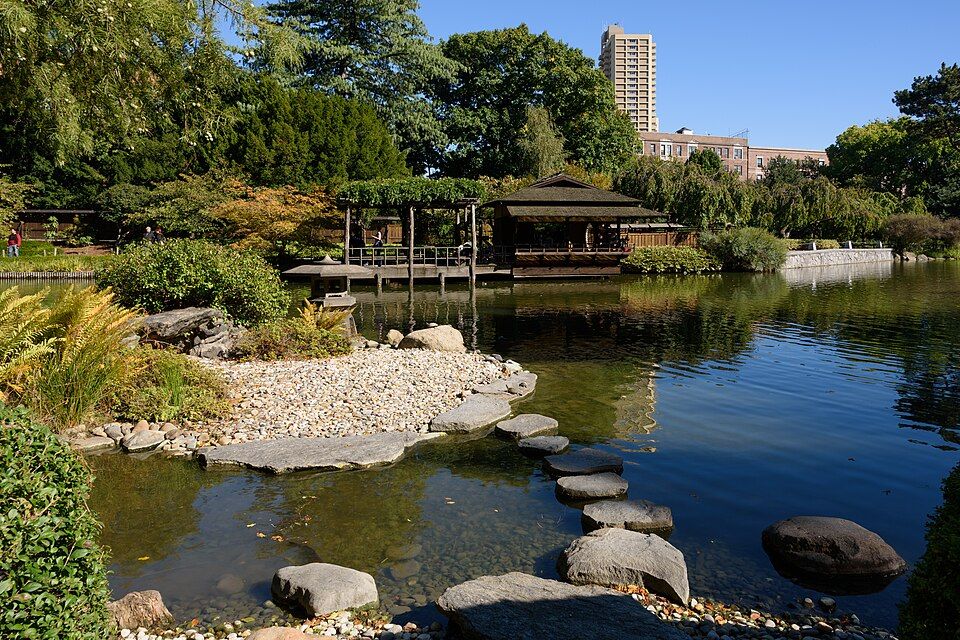
The Japanese Hill-and-Pond Garden combines hills, water, an island, carefully placed rocks and architectural elements including bridges, stone lanterns and a red torii. Its interest lies partly in how views change along winding paths. Treat the famous pond image as an introduction to the design, not the entire attraction.
Start by looking across the water, then follow an available path slowly enough to notice how a bridge or planted slope changes the composition. In leafier months, planting can screen one view and reveal another. When branches are bare, the outline of trees and the relationship between rocks, banks and water become easier to examine. These are ways to look, not guarantees of particular conditions.
If you have only about 90 minutes, an editorial suggestion is to make this garden your main stop and add one nearby collection that is open. Ask at arrival about temporary restrictions before committing to a loop. A closed path should lead to a shorter alternative, rather than a rushed attempt to reach the same viewpoint from every direction.
Roses and regional habitats offer different summer visits
For flower forms and cultivated varieties, choose the Cranford Rose Garden. The garden identifies June as its major flowering period. Modern roses occupy central beds, while species and old garden roses are around the perimeter. That layout makes a useful comparison possible without specialist knowledge: start with the simpler flower forms, then look at the fuller blooms selected through cultivation.
Do not assume every variety flowers continuously. A rose collection is also interesting for growth habits: climbers, shrubs and formal beds use the same plant group differently. Choose a handful of labels to follow instead of trying to memorise the collection. In warm weather, allow room for breaks and do not add every sunny area just because it appears nearby on the map.
The Native Flora Garden answers another question: what kinds of plant habitats belong to the New York region? Its woodland, meadow, bog and pine-barrens areas offer a contrast to ornamental beds. Notice differences in light, plant height and ground cover. Wildlife may be present, but a particular butterfly or bird sighting is never part of an admission promise.
For a summer visit, choose roses if cultivated flowers are the priority, or native habitats if ecology interests you more. Combining both is reasonable with enough energy, but a garden day need not become a collection-completion exercise.
Autumn and winter: change what you look for
In autumn, look for changing leaves and the structure of grasses as well as flowers. The native habitats and Japanese garden give you two different ways to read seasonal change: ecological communities in one, a designed landscape in the other. Colour depends on the year's weather; do not use the October date on an archival photograph as a prediction.
In colder weather, consider the indoor collections listed in the gardens and conservatories directory: the Bonsai Museum, Aquatic House and Orchid Collection, Desert Pavilion and Tropical Pavilion. These provide different subjects, from trained tree forms to adaptations to dry or humid conditions. Confirm which spaces are accessible on your date, particularly during maintenance or event installation.
A mixed winter plan works best with a short outdoor focus and selected indoor rooms. Keep a warm layer convenient for moving between them. If your sole aim is a sweeping outdoor walk, the temporary Lightscape restrictions may make another date more suitable; if you enjoy close looking at plant collections, a shorter winter visit can still have a clear purpose.
Entrances, access and food affect the route
The visitor rules currently direct visitors to 455 Flatbush Avenue or 990 Washington Avenue and list the 150 Eastern Parkway entrance as closed. Check the entrance before choosing a subway journey or taxi destination. The administrative address is not automatically the most useful arrival point.
Read the accessibility information if smooth or step-free travel matters. Paved routes connect the grounds, but some historic paths are narrow, uneven or steep. The lower conservatory level can be reached by lift. Wheelchairs are available first come, first served with government-issued photo identification; that is not an advance guarantee of availability. Ask staff for a route appropriate to the areas open that day.
This is not a bring-your-own picnic park. Outside food and drinks are generally prohibited, with stated exceptions including bottled water, baby bottles and pocket snacks for dietary restrictions. Eat before entry or use the designated on-site dining areas. Children under 14 must be supervised, and everyone needs a ticket, including free-entry visitors. Planning a food break around these rules prevents an avoidable interruption.
Choose one garden outing for your New York trip
Brooklyn Botanic Garden makes sense when you want selected plant collections within a Brooklyn day. Its nearby museum is a possible separate visit, but the garden's short winter opening day argues for putting outdoor time first. Check both institutions before buying any combination product; proximity does not establish matching opening days or exhibition inclusion.
If you are deciding between the city's two botanical institutions, compare our New York Botanical Garden guide. That garden is in the Bronx and requires a different journey. Choose by the collections, programme and neighbourhood you want, rather than assuming similar names mean interchangeable tickets or locations.
Before leaving your accommodation, make three choices: which entrance is open, which collection matters most, and when you will stop for food. Then keep one optional collection in reserve. That gives the visit enough structure to be useful while leaving room for weather, closures and an unexpectedly absorbing group of plants.
Cover photograph: Pond, stepping stones and wooden pavilion in Brooklyn Botanic Garden’s Japanese garden — Archive photograph Image adapted for publication. — King of Hearts, CC BY-SA 4.0.
Frequently Asked Questions
Is Brooklyn Botanic Garden the same as New York Botanical Garden?
No. Brooklyn Botanic Garden is beside Prospect Park and Brooklyn Museum. New York Botanical Garden is in the Bronx, with separate tickets, collections and travel arrangements.
When should I visit for cherry blossoms?
The collection generally flowers in succession from late March or early April into mid-May. Check the current year's CherryWatch near your visit; weather determines the actual timing, and all trees do not flower together.
Is Brooklyn Botanic Garden free in winter?
The notice checked on 24 November 2026 makes daytime admission pay what you wish through 15 January 2027 because of Lightscape-related restrictions. This is a dated arrangement, and everyone still needs a ticket. Evening Lightscape admission is separate.
How long should I allow?
Allow about 2–3 hours for selected gardens and conservatories, excluding travel and a substantial meal. A focused 90-minute visit is possible with fewer stops; seeing the entire garden can take a full day.
Can I bring a picnic or use the Eastern Parkway entrance?
Outside food is generally prohibited, with limited stated exceptions. The Eastern Parkway entrance was closed at the November 2026 check; use the current visitor page to confirm the Flatbush Avenue or Washington Avenue entrance before travelling.


Keep Exploring
Royal Botanic Garden Sydney: Choose Your Walk
Choose a botanical walk, harbour route or Gadigal cultural experience, with useful gates, seasonal hours and Calyx closure checks.
Chinese Garden of Friendship Sydney: Visit Guide
Plan a garden walk, guided introduction or family visit in Darling Harbour, with accessible-route choices, current activities and exhibition limits.
New York Botanical Garden: Plan Your Visit
Choose NYBG tickets, a forest or exhibition route, and the right Bronx arrival, with current tram limits and the 2026 Holiday Train Show dates.