
Museo Carrillo Gil: Plan Your Mexico City Visit
Choose a focused Museo Carrillo Gil visit through collecting and contemporary art, with current exhibition dates, admission and San Ángel planning.
Choose Museo de Arte Carrillo Gil when you want a focused art visit shaped by the exhibitions actually on view. It is a useful San Ángel stop for connecting Mexican modern art, collecting and contemporary practice. Allow about 90 minutes–2 hours as an editorial starting point, then extend the visit if the current programme particularly interests you.
The key distinction is between what the museum owns and what you can see on your date. A collection associated with major artists does not guarantee a permanent display of every celebrated work. Use our Mexico City highlights guide to choose the cultural experience you want before fitting this museum into a southern-city day.
Fast facts
| Detail | Planning information |
|---|---|
| Address | Avenida Revolución 1608, corner of Altavista, San Ángel |
| Published hours | Tuesday–Sunday, 10:00–18:00 |
| General admission | 70 MXN on the INBAL venue page |
| Free admission | Sunday; listed concessions require their applicable conditions |
| Suggested duration | 90 minutes–2 hours; longer for sustained reading or several exhibitions |
Hours and admission above were checked on 11 November 2026. Exhibition end dates below are published schedules, not a guarantee against changes. Reconfirm the programme before travelling specifically for an individual work or exhibition.
Is this the right museum for your day?
Carrillo Gil suits someone who wants to look closely at a manageable selection of art and consider how a collection is interpreted. It also works for a return visitor who already knows Mexico City's major institutions and wants a programme-led visit. It is less useful if your only objective is to see one particular painting without checking whether it is displayed.
Choose the museum before choosing the surrounding walk. If a current exhibition is the reason to travel, make it the main appointment and leave the rest of San Ángel flexible. If the neighbourhood is the main attraction, check the programme and decide whether a shorter museum stop adds something distinct.
The collection and its changing presentations create two different questions. One asks which artists and works belong to the institution's history. The other asks what the present arrangement wants you to notice. Reading only a list of famous names answers the first incompletely and says little about the second.
You do not need a comprehensive knowledge of Mexican art to enjoy the visit. Arrive with a simple comparison in mind: how does an artwork made for close viewing differ from a public monument or mural you have already seen elsewhere? Follow the actual objects in the rooms rather than trying to make the museum reproduce an imagined survey course.
Admission and weekly opening
The INBAL venue listing gives Tuesday–Sunday, 10:00–18:00, with 70 MXN general admission. It lists free Sunday entry, plus free admission for students and teachers with a valid credential, children under 12 and people affiliated with INAPAM. Check the applicable proof rather than assuming that every discount applies automatically.
Prices are in Mexican pesos. This is museum admission, not a package including another San Ángel institution. Keep separate tickets and reservations separate when comparing the cost of a full day. A free Sunday removes the listed admission charge; it does not establish that workshops, special activities or another museum are included.
Monday is outside the published weekly opening schedule. Do not infer that a holiday Monday creates an exception without a current museum announcement. Likewise, 18:00 is the published closing time, not evidence that arriving shortly beforehand permits a full visit. Confirm the day's last admission if planning a late stop.
If you are making a special journey, check both the building schedule and the exhibition dates. A museum can be open while a particular gallery changes installation. That distinction matters more than a small difference in ticket price when your main aim is one body of work.
Two useful exhibition choices for late 2026
The official announcement for Alvar Carrillo Gil: habitar el arte schedules the exhibition through 7 February 2027. Its focus is the founder's engagement with art and the process through which a private collection became a public institution.
Choose this as your starting point if you want to understand collecting rather than simply identify famous painters. Documents, photographs and architectural material invite a different kind of attention from looking at a painting alone. Ask what an archive reveals about choices, relationships and the presentation of art to a public audience.
The official XLVI Encuentro Nacional de Arte Joven announcement gives an end date of 10 January 2027. This is the more direct choice for visitors interested in emerging artistic practice and the questions younger artists bring into an institution.
Read these as two entry points, not a complete inventory of everything open. They can make a productive pairing: one asks how a collection and museum came into being; the other asks how institutions make room for new work. The connection is an editorial way to organise your attention, not a claim that the exhibitions form one compulsory route.
If travelling after either closing date, return to the current programme and choose again. The museum's value does not depend on these two exhibitions remaining indefinitely. Avoid booking a future trip around an old image or a programme announcement whose dates have already passed.
Treat collection displays as changing exhibitions
A useful example is Cúmulos y variaciones. Lecturas de la colección MACG. Bloque I. The Culture Ministry's later notice announced that this first phase ended on 1 November 2026. Earlier publicity carried a different November date; neither makes that first phase a current permanent display on 11 November.
The practical lesson is to check the current phase and actual works rather than follow an old room description. A planned rotation is not proof that its replacement is open, and a collection record is not a promise of display. Ask the museum directly if a specific artist or work is essential to your decision.
This does not make a visit unpredictable in a bad sense. It means choosing by theme and exhibition is often more reliable than choosing by a single famous object. A display about collecting or contemporary materials can remain rewarding even when it does not contain the painting that first drew your attention online.
A focused route through the visit
Begin with the current entrance information and choose one exhibition as your anchor. Spend the first few minutes reading its introductory text, then look at a small group of works before deciding how deeply to continue. Do not use the first room as a race toward everything else.
For a collection-history visit, connect an object with one piece of documentary evidence. A photograph, plan or letter can change how you understand the institution around the art. Ask what the document shows directly and what the curatorial text interprets from it. This keeps the archive from becoming background decoration.
For a contemporary-art visit, look first, read the label, then look again. Note the material, scale and arrangement before deciding what an unfamiliar object is doing in the gallery. A familiar-looking form may be made from an unexpected material; the label can alter the question rather than merely supply a title.
After your main exhibition, choose one contrasting section if energy remains. A useful visit might include fewer works and better comparisons rather than every room. Reserve the final part of your time to revisit one object whose meaning changed after reading the surrounding material.
These suggestions work without assuming a fixed floor sequence. Follow the actual open galleries and staff directions. If a gallery is changing over, redirect the visit toward the available programme instead of treating an old floor plan as a guarantee.
San Ángel: museum first or neighbourhood first?
A museum-first day suits a specific exhibition or visitors who concentrate better before lunch. Afterward, continue into San Ángel for a meal and a selective walk. Our San Ángel art-walk guide helps choose the outdoor part without turning every gallery and museum into a required stop.
A neighbourhood-first day can work if the museum is optional, but leave a realistic visiting block before closing. Do not arrive near the end of the afternoon expecting the same experience as a two-hour morning visit. A late short stop should be a conscious choice of one section.
If another museum is equally important, check its own opening and reservation arrangements and include the journey between them. Carrillo Gil is an art museum on Avenida Revolución; it is not interchangeable with an artist's house or studio simply because both sit in the south of the city.
The Mexico City tourism listing identifies Metro Barranca del Muerto on Line 7 and Metrobús Altavista on Line 1 as transport references. Check the onward walking route and current service from your accommodation. A station name alone does not establish a door-to-door duration or a completely step-free journey.
Access, interpretation and what to skip
If you need step-free circulation, seating or assistance, ask about the current route through the exhibitions you intend to see. General access provision does not answer every question about a particular installation. For a guided visit or activity, confirm language, booking requirements and availability with the museum before relying on it.
With children or companions new to art museums, choose a comparison rather than an endurance test: two materials, two ways of representing a body, or an artwork and an archive image. Invite different readings before consulting the label. You can leave with one memorable conversation instead of trying to read every panel.
Skip the pressure to add a second major museum merely because you are already in the area. Carrillo Gil earns its place through attention to the current displays. Give it that attention, then let the remaining day reflect what you actually enjoyed.
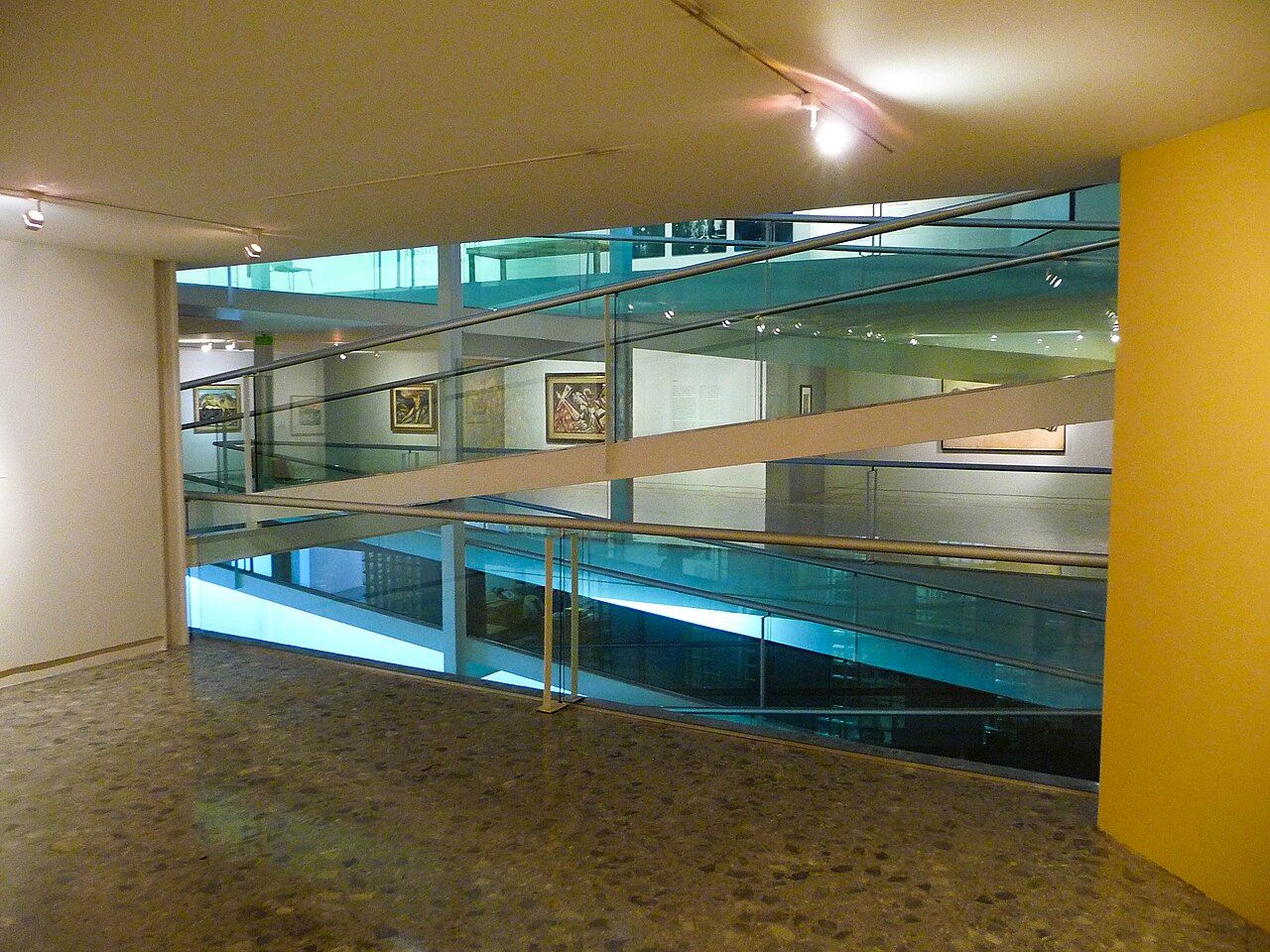
Cover photograph: Interior ramps and exhibition galleries at Museo de Arte Carrillo Gil, archive photograph — Archive interior photograph from 2009; the works shown do not represent the current exhibition programme. — Gary Denness, CC BY 2.0.
Frequently Asked Questions
How long should I spend at Museo Carrillo Gil?
Allow about 90 minutes–2 hours as an editorial estimate. A single exhibition can support a shorter visit; several exhibitions or detailed archival reading require more time.
Is the museum free on Sundays?
The INBAL venue page lists free Sunday entry, checked on 11 November 2026. General admission is listed at 70 MXN on other opening days, subject to the stated concessions.
Will I see every famous work in the collection?
No. Collection ownership does not guarantee display. Check the current exhibitions and ask about a particular work before travelling specifically to see it.
Can I combine it with a San Ángel walk?
Yes. Choose the museum or neighbourhood as your main focus, preserve a proper visiting block and check separate arrangements for any additional institution.


Keep Exploring
Museo Tamayo: Plan Your Mexico City Art Visit
Plan Museo Tamayo with current opening checks, admission, Sunday access, architecture and a focused Chapultepec museum route.
Museo de Arte Popular: Plan Your Mexico City Visit
Plan Mexico City’s Museo de Arte Popular: craft collections, admission, Sunday access and a focused visit near the Alameda.
Museo Soumaya: Plan Your Mexico City Visit
Plan a free Museo Soumaya visit at Plaza Carso: choose galleries, check English tours and decide whether to add neighbouring Jumex.