
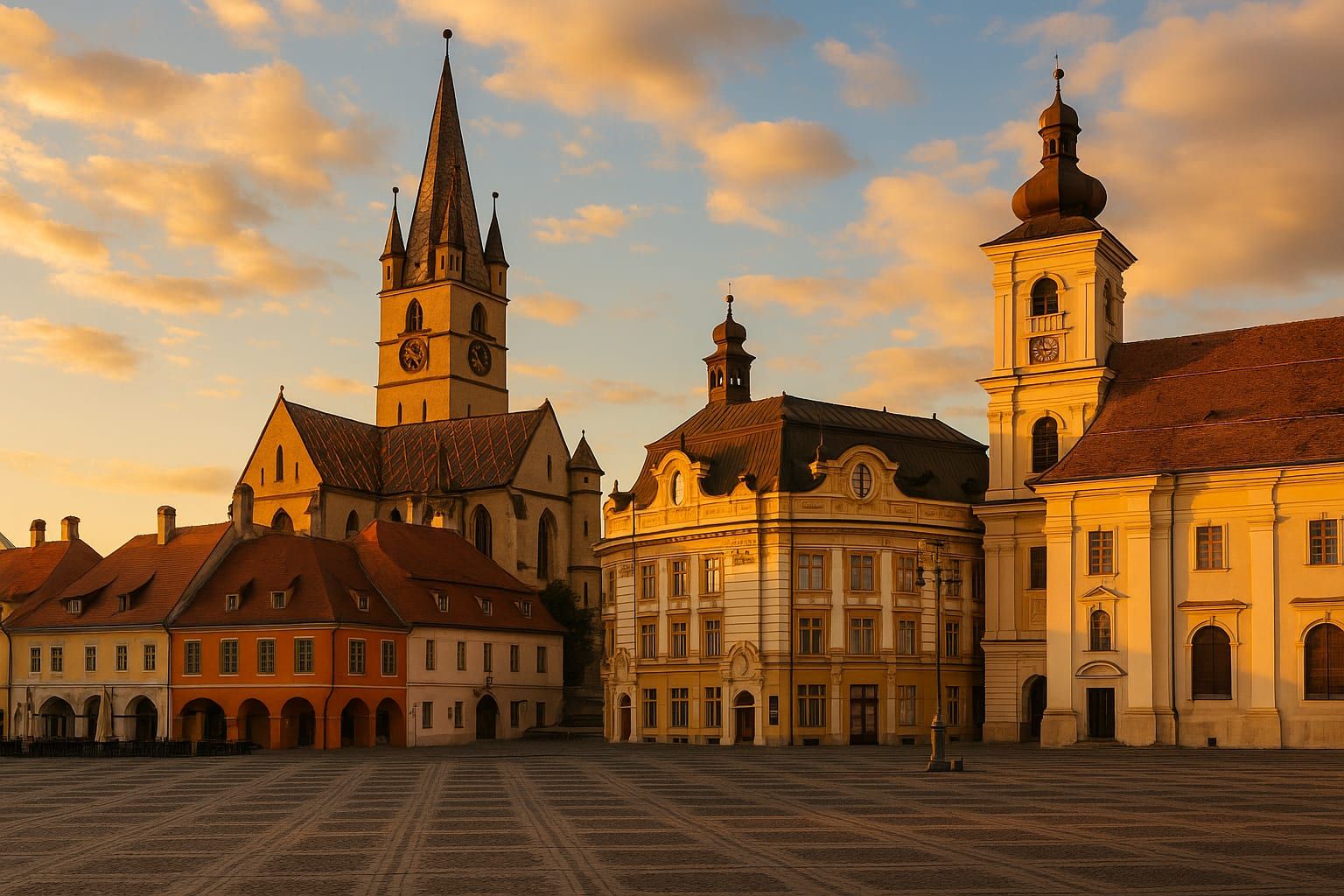
Explore Sibiu — a medieval Transylvanian gem. This guide covers top sights, day trips, seasonal highlights, local food and practical tips for a memorable visit.
Sibiu: Transylvania's Most Charming City
Nestled in the foothills of the Southern Carpathians, Sibiu is one of Romania’s most photogenic and pleasantly walkable cities. With pastel-hued squares, fortified towers, Baroque facades and an unmistakable Saxon flavour, Sibiu combines medieval atmosphere with a lively cultural calendar. This guide covers the top sights, local food, day trips, seasonal highlights and practical tips to help you make the most of a visit.
Why Visit Sibiu?
- A beautifully preserved medieval centre ideal for wandering on foot.
- Cultural weight: Sibiu was Romania’s first European Capital of Culture (2007) and hosts major festivals — notably the Sibiu International Theatre Festival.
- Proximity to dramatic mountain drives (including the famous Transfăgărășan) and fortified Saxon villages.
- Excellent museums, atmospheric Christmas market and friendly cafés.
Whether you’re after architecture, food, festivals or outdoor excursions, Sibiu acts as a perfect base for exploring central Transylvania.
Top Sights in Sibiu
Piata Mare (Large Square) and Piata Mica (Small Square)
Begin at Piata Mare, the city’s grand plaza lined with cafés and historic buildings. From there slip into Piata Mica — a postcard-perfect square where medieval houses lean overhead and the famous Bridge of Lies connects two streets.
The Bridge of Lies
This iron pedestrian bridge is Sibiu’s most photographed landmark and comes with local legend: it “tells lies” because it will crack if you lie while standing on it. It’s a delightful spot for photos and people-watching.
Evangelical Cathedral & The Council Tower
Climb the Council Tower for sweeping views of Sibiu’s red rooftops and the surrounding hills. Nearby, the Evangelical (Lutheran) Cathedral dominates the skyline with its Gothic spire.
Brukenthal National Museum
Housed in a grand Baroque palace, the Brukenthal is one of Romania’s oldest museums with collections of European art, rare books and decorative arts. Art lovers should plan at least an hour here.
ASTRA National Museum Complex
A short ride from the city centre lies ASTRA, one of Europe’s largest open-air ethnographic museums. Wooden churches, traditional houses and craft demonstrations span a sprawling, atmospheric park — great for families and anyone curious about Romanian rural life.
The Eyes of Sibiu and Medieval Fortifications
Look up: attic windows shaped like eyes peer from many roofs across the old town — a quirky local trademark. Walk the surviving walls and bastions for a sense of the city’s defensive past.
A Sample 2–3 Day Itinerary
Day 1 — Old Town & Museums
- Morning: Start at Piata Mare and Piata Mica, cross the Bridge of Lies.
- Midday: Visit the Brukenthal Museum and have lunch at a piazza-side tavern.
- Afternoon: Climb the Council Tower and wander the Lutheran Cathedral.
- Evening: Enjoy craft beer or wine at a cosy bar; sample papanasi (Romanian doughnuts) for dessert.
Day 2 — ASTRA Museum & Local Neighbourhoods
- Morning: Head to the ASTRA Museum Complex (allow 3–4 hours).
- Afternoon: Return and explore Huet Square, the Citadel area and independent galleries.
- Evening: Catch live music or a theatre performance if available.
Day 3 — Drive or Day Trip
- Option A: Drive the Transfăgărășan (seasonal) and visit Balea Lake.
- Option B: Explore fortified Saxon villages or head to Brașov — an easy day trip or overnight (see day trips below).
For a longer Transylvania route that includes Sibiu and Brașov, consider planning with established itineraries such as this four-day Transylvania loop: /en/itineraries/4-days-transylvania-brasov-castles-mountains
Where to Eat & Drink: Local Flavours
Sibiu’s dining scene blends hearty Romanian classics with Central European (Saxon) influences. Look for places around Piata Mare, Strada Nicolae Balcescu and the pedestrianised lanes that radiate from the centre.
- Must-try dishes: ciorbă (sour soup), sarmale (cabbage rolls), mici (grilled spiced sausages), and papanasi for dessert.
- Coffee culture: morning espresso or long latte in one of the old-town cafés; many serve excellent pastries and locally roasted beans.
- Local drinks: Romanian craft beers and Transylvanian wines are widely available; try a dry Fetească Neagră or a glass of local craft beer.
Tip: Weekday lunches often feature fixed-price menus (meniul zilei) offering a filling, budget-friendly meal.
Festivals & Seasonal Highlights
- Sibiu International Theatre Festival (spring/early summer): one of Europe’s most important performing arts festivals.
- Christmas Market: Sibiu’s Christmas market is frequently named among Romania’s loveliest — expect twinkling lights, mulled wine and handicrafts. If you’re researching European Christmas markets, this city is a worthy stop: /en/seasonal-travel/best-christmas-markets-europe-complete-guide
Summer months fill the streets with terraces and outdoor concerts, while autumn brings beautiful colours to the surrounding hills.
Day Trips and Excursions
Sibiu is an excellent base for exploring Transylvania’s highlights.
- Transfăgărășan Road & Balea Lake: a dramatic high-altitude drive (open seasonally, usually summer). Allows mountain hikes and alpine vistas.
- Fortified churches and Saxon villages: Cisnădie, Cisnădioara, and the UNESCO-listed village of Biertan showcase local heritage.
- Brașov and Bran Castle: Brașov is an easy train/bus/drive away and a charming medieval city; pair it with Bran (Dracula) Castle for the tourist classic. Read more about Brașov as a mountain-town gem here: /en/hidden-gems/brasov-romania-most-beautiful-mountain-town
If you’re planning a route through central Romania, Sibiu fits neatly into multi-day Transylvania itineraries that combine culture and nature.
Practical Tips & Local Insights
Getting There
- By air: Sibiu International Airport receives flights from Bucharest and several European cities. Seasonal charters increase in summer.
- By train/bus: Direct trains connect Sibiu with Bucharest and Cluj; buses and regional trains provide good coverage across Transylvania.
- By car: Driving gives maximum flexibility for day trips (Transfăgărășan, fortified villages). Roads are generally in good condition but watch for narrow mountain stretches.
Getting Around
- Walk whenever possible — the old town is compact and pedestrian-friendly.
- Local buses and taxis are available for longer routes; ride-hailing apps operate in larger Romanian cities but check coverage in Sibiu beforehand.
Money, Language & Tipping
- Currency: Romanian leu (RON). Cards are widely accepted in restaurants and shops, but keep some cash for markets, small cafés and rural stops.
- Language: Romanian is the official language. Many people — particularly in hospitality and younger locals — speak English. German influence remains visible in architecture and some older residents’ language use.
- Tipping: 10% is customary in restaurants if service is not included.
Safety & Practicalities
- Sibiu is a safe city for solo travellers and families. Standard precautions for theft and pickpocketing apply in crowded areas.
- Museum opening hours can vary; many museums close one day a week (often Monday) — plan ahead.
- Dress: Winters are cold and snowy; bring layers. Comfortable shoes are essential for cobbled streets.
Cultural Notes & Local Character
- Saxon legacy: Sibiu’s German (Saxon) settlers left an enduring imprint on architecture and layout — the city has a slightly Central European feel, sometimes likened to a small Vienna.
- “The eyes of Sibiu”: those distinctive attic windows are practical and iconic — locals affectionately refer to them when describing the skyline.
- Hospitality: Sibiu’s residents are characteristically welcoming; small shops and cafés often reward curiosity with friendly conversation.
Where to Stay
Options range from boutique hotels in renovated historic buildings to budget guesthouses and apartments. For first-timers, staying within walking distance of Piata Mare guarantees easy access to the main sights, restaurants and nightlife.
Sample Budget (per day, per person)
- Budget: €30–€50 — hostel or budget guesthouse, public transport, local meals.
- Mid-range: €50–€120 — comfortable hotel, museum entries, cafés and dinners.
- Splurge: €120+ — boutique hotels, guided excursions, fine dining.
Prices vary by season, with peak festival dates and December seeing higher rates.
Useful Day-to-Day Phrases
- Bună ziua — Hello (formal)
- Mulțumesc — Thank you
- Cât costă? — How much does it cost?
Locals appreciate even basic Romanian greetings — make an effort and you’ll often get a warm response.
Final Thoughts
Sibiu rewards slow travel: wander without a strict schedule, linger in cafés, climb towers for sunset and save time for spontaneous discoveries in narrow lanes. Its mix of medieval charm, lively cultural scene and access to dramatic mountain roads make it a must-visit on any Transylvania itinerary.
For travellers planning a multi-day route through the region, Sibiu pairs beautifully with Brașov and Transylvania’s castles and villages — explore sample routes like /en/itineraries/4-days-transylvania-brasov-castles-mountains and don’t forget to time a winter visit during the city’s atmospheric Christmas market season: /en/seasonal-travel/best-christmas-markets-europe-complete-guide
Happy travels — and don’t forget to look up at those famous eyes.
Written by
Léa Brunet
Léa hunts down the places that aren't yet on the lists — quiet villages, overlooked neighbourhoods, side-streets that locals keep to themselves. She's drawn to anywhere a guidebook gives less than half a page.
Keep Exploring
Ultimate Balkans Road Trip: Slovenia to Montenegro
Explore the Balkans by road: Ljubljana, Lake Bled, Plitvice, Mostar and Durmitor. A 12-day itinerary with tips on driving, where to stay, must-see hikes and local eats.

Discover Montenegro: Coast, Canyons & Towns
From the turquoise fjord-like bay of Kotor to the soaring peaks and canyons inland, Montenegro packs dramatic scenery, medieval towns and outdoor adventure into a compact, unforgettable trip.
A Week in the Balkans: Lakes, Mountains & Towns
A practical 7-day Balkans guide blending lakes, mountains and medieval towns—itinerary, transport tips, budgets and local insights for a memorable week-long trip.