
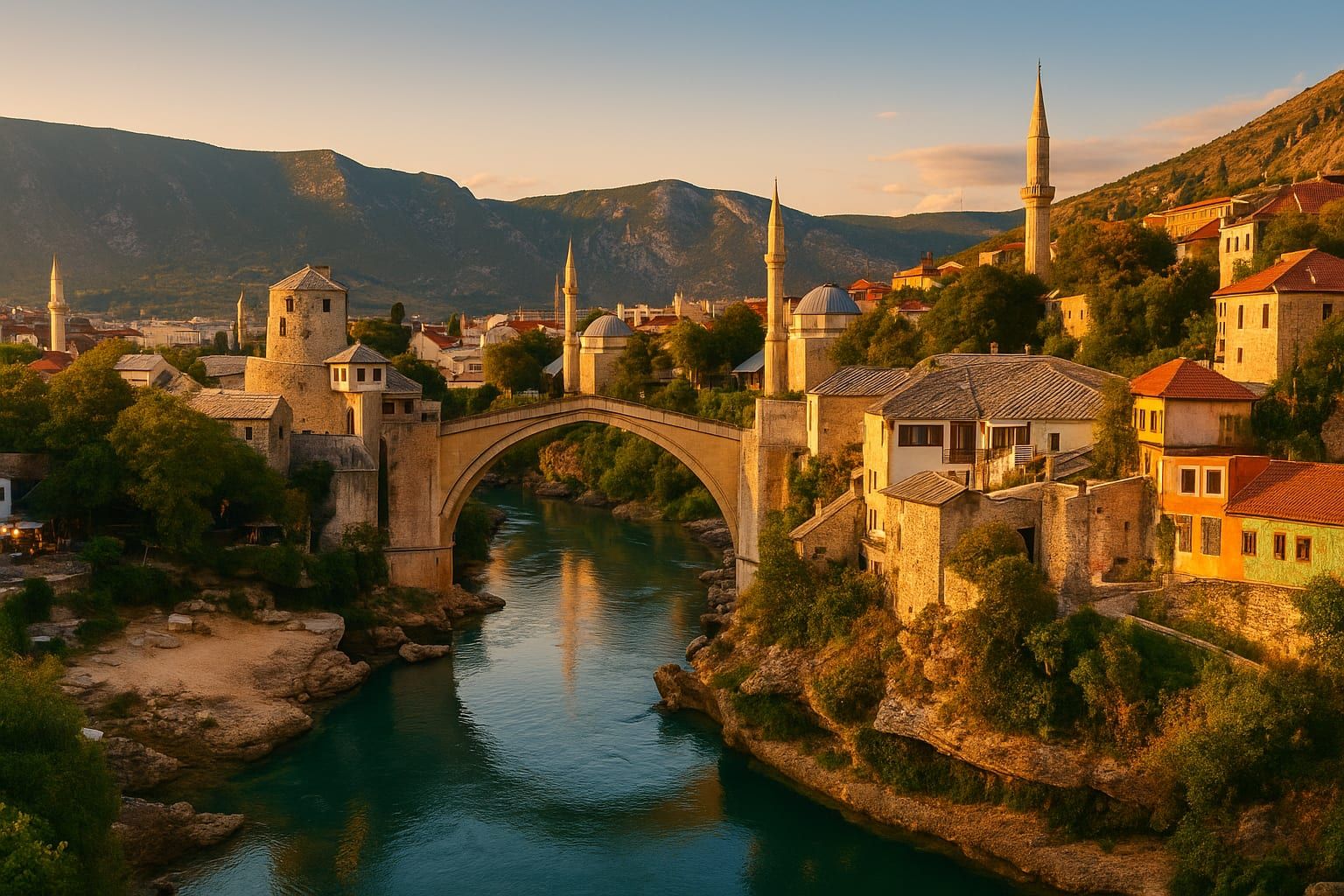
Mostar straddles the emerald Neretva: Ottoman minarets, Austro-Hungarian facades and the iconic Stari Most rebuilt after the war. A traveler's guide to history, food and tips.
Mostar: Where East Meets West on the Neretva
Perched on the banks of the emerald-green Neretva River, Mostar is one of the Balkans' most cinematic cities: a compact old town of cobbled streets, Ottoman-era mosques and artisan shops on one bank, and Austro-Hungarian architecture, cafés and modern life on the other. At its heart stands Stari Most — the Old Bridge — a slender, elegant arch that has come to symbolize both the city's past divisions and its resilient comeback.
This guide unpacks Mostar’s layered history, practical travel tips, local experiences and off-the-beaten-path suggestions so you can make the most of a visit to this where East meets West.
Why Mostar matters
Mostar is more than a postcard. It’s a living crossroads where Ottoman, Mediterranean and Central European influences meet in architecture, food, religion and daily life. The city was dramatically affected during the 1992–1995 war; key monuments were destroyed and later painstakingly rebuilt. Today the restored Stari Most and the Old City are UNESCO-recognized icons — a testament to cultural preservation and reconciliation.
What to see and do
Stari Most (Old Bridge)
No visit is complete without the bridge. Originally built in the 1560s by the Ottomans, it collapsed in 1993 and was reconstructed using traditional methods and local stone, reopening in 2004. Walk across to admire the curve framing the river; stand on either bank at sunrise or sunset for the best light.
Watch the famous bridge divers — local men who leap from the arch into the Neretva for cash prizes and applause. Diving is seasonal (warmer months) and dangerous; always watch from a safe distance.
The Old Bazaar (Kujundziluk)
A short stroll from the bridge, the bazaar’s narrow lanes are lined with shops selling copperware, handmade jewellery, carpets, and traditional crafts. It’s a great place to buy souvenirs and watch artisans at work. Haggle gently — it's expected but polite.
Koski Mehmed Pasha Mosque & Minaret
Climb the minaret (there’s a small fee) for one of Mostar’s best panoramic views: the bridge, the river canyon and the terracotta roofs stretching into the hills.
Muslibegović House and Ottoman Houses
Visit preserved Ottoman homes to see how wealthy families lived: carved woodwork, layered textiles and courtyards. Muslibegović House (a guesthouse/museum) provides context on life under Ottoman rule and into the Austro-Hungarian era.
Museums and history
Mostar has several small museums and exhibitions that document the city's complex 20th-century history: wartime damage, the social fabric before and after conflict, and stories of everyday resilience. Spend time at a war exhibition or local history museum to gain respectful context.
Walk the Riverbanks and Lookouts
Follow the river upstream and downstream for quieter spots and great photo opportunities. The north bank has newer promenades and cafés; the east-west contrast is visible in signage, post offices and subtle cultural cues.
Day trips from Mostar
- Blagaj Tekke (≈12 km): A stunning 16th-century Dervish house built at the spring of the Buna River. The turquoise water and cliffside setting are unforgettable.
- Počitelj: An authentic Ottoman-era village with a fortress and panoramic views — less crowded and evocative.
- Kravice Waterfalls: A short drive for swimming and picnicking beneath cascading falls in summer.
Food and drink — Taste the crossroads
Mostar’s cuisine shows Ottoman, Mediterranean and Central European influences. Try:
- Ćevapi: Grilled minced meat sausages served with flatbread and onions.
- Burek: Flaky pastry filled with meat, cheese or spinach — a staple breakfast.
- Fresh trout: Neretva trout grilled simply, often on menus by the river.
- Bosnian coffee: Thick, unfiltered and served in small cups — linger over it.
- Baklava and kadayıf for dessert.
Eat at small local konobas and riverside restaurants for authentic flavours. If you like coffee culture, step into a kafana (traditional coffeehouse) and try Bosnian coffee with rahat lokum (Turkish delight).
Practical tips and local insights
Getting there
- From Sarajevo: Buses run regularly and take about 2.5–3 hours. Book ahead in summer.
- From Dubrovnik or Split (Croatia): Buses connect coastal cities with Mostar; travel times vary depending on border crossings.
- By car: Roads are good, and driving gives flexibility to visit nearby Blagaj and Kravice.
- Train: There is a rail link but schedules can be limited and slower than buses.
Where to stay
- Old Town (Stari Grad): Best for first-time visitors who want to be within walking distance of the bridge, bazaar and museums.
- West Bank (Podveležje and modern centre): More modern hotels and apartment options; slightly quieter evenings.
Book ahead in July–August. Guesthouses in restored Ottoman houses offer atmosphere and character.
Currency, cards and money
- Local currency: Convertible Marka (BAM). Euros are sometimes accepted, but BAM is preferred.
- ATMs are available in the city; bring some cash for small shops, bazaars and tip jars.
- Credit cards are accepted in most restaurants and hotels, but always carry cash for market stalls and smaller cafés.
Language and communication
- Official languages are Bosnian, Croatian and Serbian. Locals in tourist areas often speak some English, particularly younger people and guides.
- Learn basic greetings: “Dobar dan” (Good day), “Hvala” (Thank you), and “Molim” (Please/You’re welcome).
Safety and cultural sensitivity
- Mostar is generally safe for tourists. Use normal precautions against pickpocketing in crowded areas around the bridge.
- Be sensitive when discussing wartime history or ethnic politics — locals have lived through recent trauma.
- Dress respectfully when visiting mosques (cover shoulders and knees; women may be asked to cover hair).
Best time to visit
- Shoulder seasons (May–June and September–October) offer pleasant weather, fewer crowds and better prices.
- July–August is peak season: hot days and busy streets, but lively cultural events and river activities.
- Winters are quiet and chilly; some attractions may have reduced hours.
Health and practical gear
- Wear comfortable walking shoes: cobbles and hills demand good soles.
- Bring sunscreen and a hat in summer — shade is limited in the busiest parts of the Old Town.
- If you plan to swim in the Neretva or at Kravice, pack swimwear and water shoes.
Local experiences worth seeking out
- Sunrise & sunset at Stari Most: Early morning light and late-afternoon glow make for the most atmospheric photos without the crowds.
- Coffee with an elder in a kafana: A slow, sociable way to connect to everyday Mostar life.
- Copper workshop visit: Watch artisans hammer and etch copper trays and lamps — many family workshops have been in business for generations.
- Guided walking tour with a local: Especially valuable to gain nuanced insights into the city’s layered history.
Responsible travel notes
- Support local businesses: small restaurants, family-run guesthouses and artisan shops help Mostar’s economy thrive.
- Be mindful of sites that bear war scars — many residents keep personal and community memories close.
- Reduce plastic waste, especially beside the river; the Neretva’s clarity is part of what makes the region special.
Sample 48-hour Mostar itinerary
Day 1
- Morning: Arrive, check into a guesthouse in Stari Grad. Coffee in a kafana.
- Late morning: Walk Stari Most, explore Kujundziluk bazaar and artisan shops.
- Lunch: Try fresh trout by the river.
- Afternoon: Climb Koski Mehmed Pasha minaret, visit an Ottoman house museum.
- Evening: Sunset photos at the bridge, dinner at a riverside konoba.
Day 2
- Morning: Short trip to Blagaj Tekke for the spring and cliffside monastery.
- Lunch: Back in Mostar — burek and coffee.
- Afternoon: Museum visit, leisurely riverwalk or a swim at a nearby spot in summer.
- Evening: Watch bridge divers (seasonal), enjoy a relaxed dinner and local rakija.
Final thoughts
Mostar is small enough to explore on foot but rich enough to reward a slow pace. It’s a city of contrasts — stone and water, minarets and bell towers, memory and recovery. Whether you come for the architecture, the food, the history, or simply to stand on the bridge and watch the river flow, Mostar leaves a lasting impression.
If you enjoy discovering European cities that fly under the radar, you may also like our guide to other lesser-known gems in the region: check out 5 Underrated European Cities to Visit Before They Go Mainstream for inspiration, and consult our calendar of Traditional Festivals in the Balkans to time your visit with local events.
- Explore more: /en/hidden-gems/5-underrated-european-cities-visit-before-mainstream
- Time your trip: /en/local-culture/traditional-festivals-balkans-cultural-calendar
Happy travels — and take time to listen to the river as it threads through Mostar’s history.
Related
Keep Exploring
Siracusa: Sicily's Most Beautiful Ancient City
Siracusa is Sicily’s most beautiful ancient city: Greek theatres, Baroque Ortigia, seafood markets and sun-drenched alleys. This guide covers highlights, food, itineraries and practical tips.
Sarajevo: Europe's Jerusalem You've Never Visited
Discover Sarajevo — a compact, soulful capital where mosques, churches and synagogues stand within earshot, Ottoman bazaars meet Austro-Hungarian boulevards, and history hums in every street.
Ohrid: Europe's Hidden Lake Paradise
Discover Ohrid, North Macedonia — a UNESCO lakeside jewel. From crystal-clear Lake Ohrid and ancient churches to hidden beaches and local food, this practical guide covers what to see, do and how t...