
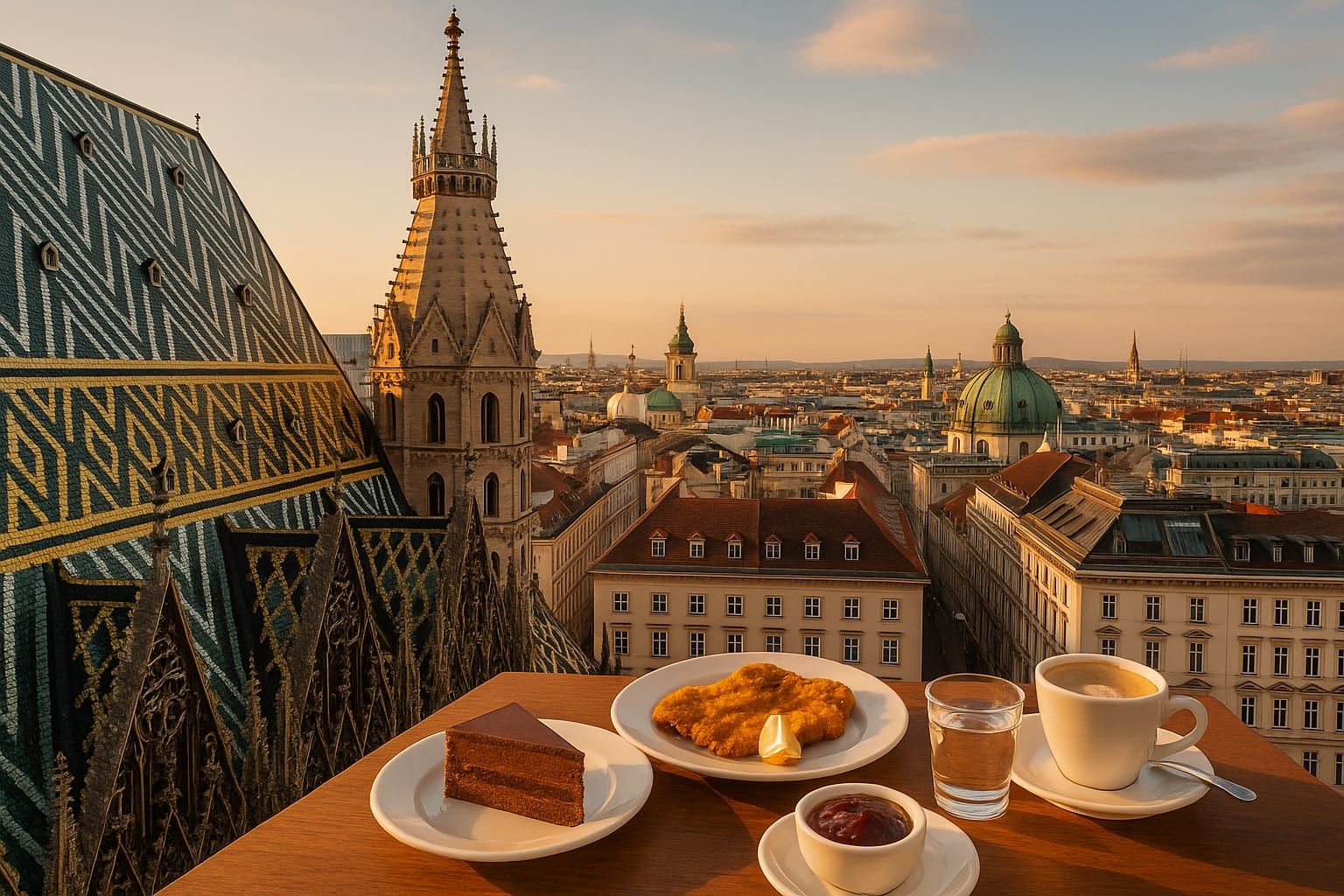
A foodie primer to Vienna's iconic coffee houses, legendary cakes and where to find the best Wiener schnitzel — plus local tips, etiquette and a day plan.
Vienna Food Guide: Coffee, Cake & Schnitzel
Vienna is a city that tastes like history. Its grand coffee houses, elegant pastry shops and rustic taverns are living archives of empire, art and everyday life. This guide will help you understand what to order, where to go and how to eat like a local — from the perfect Melange and a slice of Sachertorte to the crispiest Wiener schnitzel you can find.
Why Vienna? The food story in a few bites
Vienna's culinary identity grew from its role as a crossroads of the Habsburg Empire. That mix produced buttery pastries from Central Europe, coffee culture shaped by Ottoman imports, and meat-forward dishes refined in Viennese taverns. For centuries the coffee house has been the city’s social living room — a place to read, debate or simply linger over multiple cups. In 2011, Vienna's coffee house culture was recognized on UNESCO's list of intangible cultural heritage, and for good reason: coffee here is less a quick to-go ritual and more a languid ceremony.
Coffee culture: more than a caffeine fix
A short primer and etiquette
Viennese coffee houses are designed for time: bring your patience. Staff expect you to sit, enjoy your drink and perhaps a small pastry, and stay for a while. Many locals treat a café visit as an afternoon ritual — the so-called 'Kaffee und Kuchen'. Tipping is customary (round up or add 5-10%), and service often feels relaxed rather than rushed.
Practical notes:
- Most cafés accept cards, but carrying a few euros for small places or tips is handy.
- Breakfast crowds arrive early; afternoons are prime for cakes and people-watching.
- Dress is casual; the cafés are a mix of grand salons and cozy neighborhood spots.
Coffee types to know
- Melange: Vienna's version of a cappuccino — steamed milk with espresso, lightly frothy.
- Einspänner: A strong black coffee topped with whipped cream, served in a glass.
- Verlängerter: A longer espresso, like an Americano but with a Viennese touch.
- Kleiner/Großer Brauner: Small/large espresso-based drinks.
- Fiaker: A café with a shot of rum or schnapps and cream (often seen in older menus).
When in doubt, order a Melange and watch how locals pair it with a slice of cake.
Classic cafés worth visiting
- Café Central: A literary landmark with vaulted ceilings and a diverse pastry counter. It can be touristy, but the atmosphere is iconic.
- Café Sacher / Hotel Sacher: Famous for the Original Sachertorte. A slice here is a ceremonial experience.
- Demel: More than a patisserie — it's a historic confectioner with ornate displays and old-world service.
- Café Sperl and Café Hawelka: Neighborhood favorites where you can soak up authentic Viennese atmosphere.
Tip: If you want the Original Sachertorte experience, go to Hotel Sacher early to avoid long waits. Demel serves a different take and there is a friendly rivalry between the two — try both if you can.
Cake and pastries: the sweeter side of Vienna
Vienna is synonymous with pastry. The city's konditoreien (pastry shops) are temple-like spaces dedicated to cream, chocolate, and flaky layers.
Cakes you should try
- Sachertorte: Dense chocolate cake with apricot jam and a dark chocolate glaze. Taste both at Hotel Sacher and at Demel and decide which you prefer.
- Apfelstrudel: Thin pastry rolled around tart apples, raisins, cinnamon and breadcrumbs. Best warm with a scoop of vanilla ice cream.
- Esterházy Torte: A layered cake of nut meringue and buttercream, typically glazed with a chessboard pattern.
- Topfen/Quark torte: A creamy, slightly tangy cheesecake made with fresh curd cheese.
- Kaiserschmarrn: Fluffy shredded pancakes, caramelized and served with plum or apple compote — more of a dessert/pancake hybrid.
Many cafés offer generous slices, so consider sharing if you plan to taste multiple treats.
Where to indulge
- Demel: For elaborate pastries and a theatrical counter.
- Hotel Sacher Café: For the Sachertorte ritual.
- Naschmarkt stalls: Seasonal sweets and modern bakeries; great for sampling different pastries while exploring the market.
- Local konditoreien: Walk down a side street and you’ll likely stumble on an authentic family-run pastry shop with superb cakes and far fewer tourists.
Local insight: Austrians often enjoy cake in the late afternoon as part of the 'Kaffee und Kuchen' tradition. If you want to experience a more local scene, skip the busiest tourist cafés mid-afternoon and look for neighborhood konditorei.
Schnitzel: the star of savory Vienna
What is Wiener schnitzel?
Wiener schnitzel is a thin, breaded and pan-fried cutlet traditionally made from veal. If prepared with pork, it may be labeled 'Schnitzel Wiener Art' (Wiener-style). The classic accompaniments are a lemon wedge, potato salad or parsley potatoes, and sometimes cranberry or lingonberry jam.
A few key points:
- Authentic Wiener schnitzel is veal. If you want pork, ask for 'Schnitzel vom Schwein' or 'Schnitzel Wiener Art'.
- The crust should be golden and light, not heavy with batter. It’s about crispness and delicate meat.
Top places to try schnitzel
- Figlmüller: Legendary for enormous, paper-thin schnitzels; the near-St. Stephen's location is the most famous. Portions are generous — come hungry.
- Typical Gasthäuser: Look for neighborhood gasthäuser (traditional inns) where schnitzel is homestyle and well-priced.
- Schnitzel-focused spots: Many places specialize in schnitzel and offer modern variations with different coatings and toppings.
Reservation tip: Popular restaurants like Figlmüller often have long waits; book ahead or go at off-peak hours (earlier than 7 pm).
Beyond coffee, cake and schnitzel
Vienna's culinary scene has depth beyond its most famous exports. A few classics and modern trends to explore:
- Tafelspitz: Boiled beef served with horseradish and root vegetables — a Viennese classic.
- Gulasch: Hearty paprika-spiced stew with Central European roots.
- Sausages and Würstelstands: Quick, satisfying and ideal for a late-night snack.
- Modern cafés and specialty roasters: The city has a growing third-wave coffee scene, with neighborhood roasters offering single-origin brews and espresso-forward menus.
- Heuriger: Wine taverns in the outskirts where you can pair local wines with simple cold plates — perfect for a relaxed evening.
If you have time, consider a short food-focused day trip. Bratislava is just an hour away by train and makes a great paired destination if you’re exploring the region — see practical itineraries for nearby getaways in our Weekend in Bratislava guide: Weekend in Bratislava.
A sample foodie day in Vienna
Morning
- Start at a neighborhood café for a Melange and a pastry (try a warm Apfelstrudel).
- Walk through the historic Innere Stadt and take in the architecture.
Lunch
- Head to a classic gasthaus for Wiener schnitzel and a potato salad. Share a schnitzel if it’s large — they’re often enormous.
Afternoon
- Visit Demel or Café Sacher for a slice of Sachertorte and an Einspänner while people-watching.
Evening
- For variety, try Tafelspitz at a well-regarded restaurant or discover a Heuriger just outside the center for wine and regional snacks.
Seasonal bonus: If you visit during winter, pair coffee house stops with Vienna’s festive markets — our Vienna Christmas Markets guide has the best places to combine mulled wine and pastries: Vienna Christmas Markets.
Practical tips and local insights
Money and prices
- Coffee: Expect roughly €3–€5 for a café specialty; specialty cafes may be slightly higher.
- Cake: Slices range €3–€7 depending on the venue.
- Schnitzel: Traditional inns and restaurants vary from €10 at simple places to €20+ at tourist hotspots.
- Cards are widely accepted, but small cafés and market stalls sometimes prefer cash.
Tipping and service
- Tip around 5–10% for table service. In cafés, round up or leave small change.
When to go
- For a quieter experience, visit cafés mid-morning or late afternoon on weekdays. Weekends and holidays are busier, especially at famous spots.
Dietary options
- Vegetarian options have improved in Vienna, with many cafés and modern restaurants offering meat-free versions of classics. If you’re vegan or gluten-free, check menus or ask staff; many places will help adapt dishes.
Reservations
- Book ahead for well-known restaurants (Figlmüller, Hotel Sacher) and for dinner on weekends.
Language and ordering
- German is the language, but English is widely spoken in hospitality. Learn a few phrases like 'Bitte' (please) and 'Danke' (thank you) — they’re appreciated.
Respect the culture
- Cafés are meant for lingering — enjoy the unhurried pace. Take your time and savor the ritual.
Sustainability and sourcing
- In recent years, Vienna’s cafés and restaurants have placed more emphasis on quality, seasonal produce and transparent sourcing. Support small Konditoreien and independent cafés where possible to help sustain local culinary traditions.
Quick checklist before you go
- Pack a small amount of cash for neighborhood cafés and markets.
- Reserve for famous restaurants or go early.
- Try both Hotel Sacher and Demel to settle the Sachertorte debate for yourself.
- Order a Melange and an Einspänner to taste two different Viennese coffee styles.
- Share a schnitzel if you’re not extremely hungry — portions are generous.
Vienna combines imperial elegance with homely comfort on a plate. Whether you’re sipping a Melange beneath frescoed ceilings, choosing between historic Sachertorte rivals or tearing into a perfectly crisp schnitzel, the city invites a slow, sensory approach to eating. If you want to broaden your Central European culinary itinerary, check our regional guides for neighboring food scenes — from Budapest's authenticity to nearby weekend escapes — like our Budapest Food Guide: Budapest Food Guide.
Enjoy the flavors, and remember: in Vienna it’s not just about what you eat, but how long you stay at the table.
Related
Keep Exploring

Wine Tasting in Bordeaux: Complete Guide
Everything you need to plan the perfect Bordeaux wine-tasting experience: regions, top châteaux, how to taste, booking tips, transport, seasonality and local insights.
Cooking Classes in Italy: Florence, Rome & Beyond
Learn to make pasta, pizza, gelato and regional classics with hands-on classes in Florence, Rome and beyond — market tours, agriturismo experiences and practical tips.
Best Gelato in Italy: City-by-City Guide
A tasty city-by-city guide to Italy’s best gelato: top shops, regional flavors, how to pick an artisan gelateria, and local tips to make every scoop memorable.