
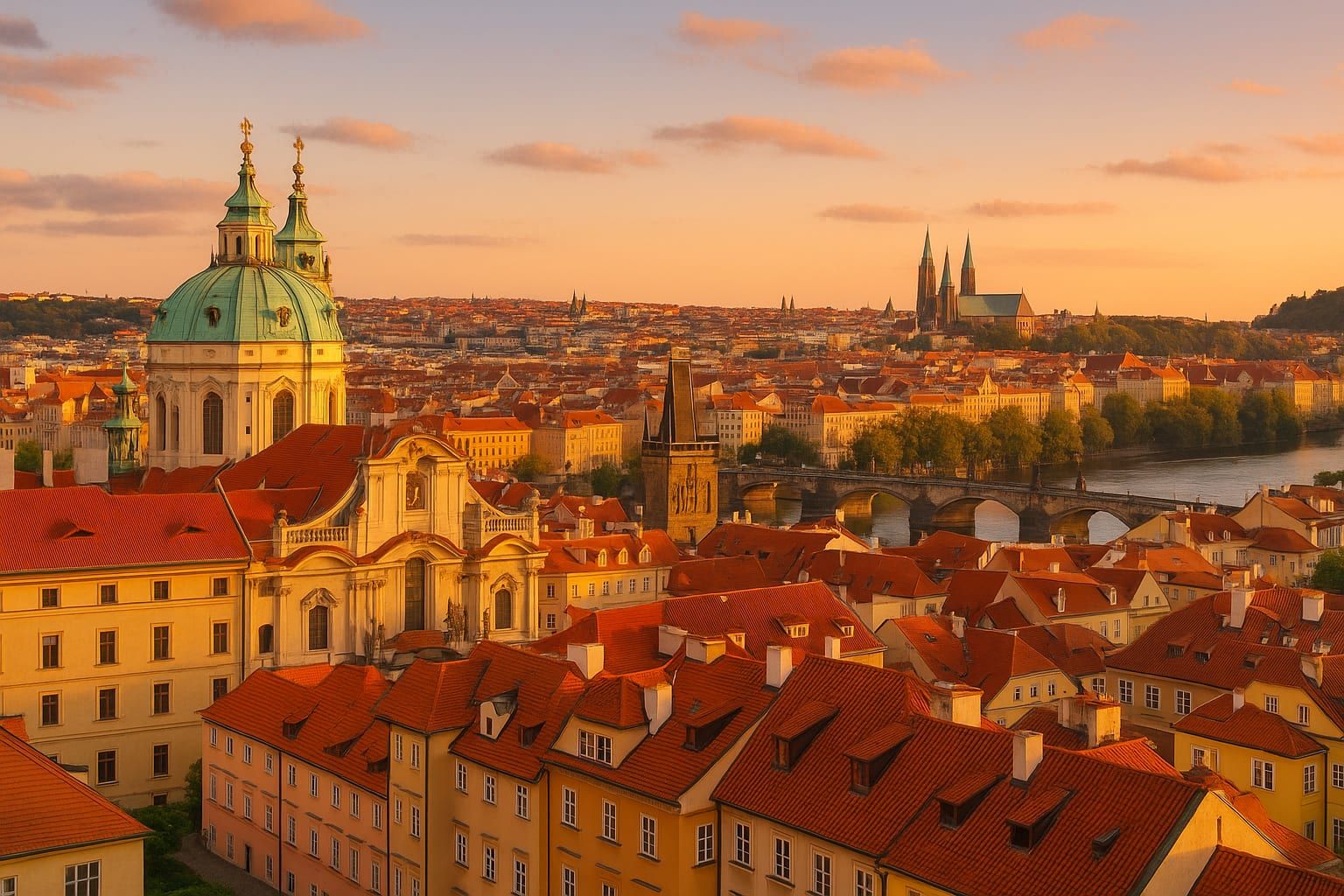
Planning a budget-friendly European trip in 2025? Discover the top cheapest countries to visit, realistic daily budgets, travel tips, and local insights to stretch your euro.
Europe has a reputation for being expensive, but that is only half the story. Travel east and south of the old Iron Curtain line and prices fall dramatically, often by half or more, while the history, food and landscapes lose nothing. This is our 2026 guide to the cheapest countries in Europe, ranked for budget travelers and grounded in official European price data.
Quick answer: The cheapest countries to visit in Europe in 2026 are Albania, North Macedonia, Bulgaria, Romania and Bosnia & Herzegovina, where a backpacker budget of €30–€45 a day covers dorm beds, local meals and intercity buses. By official Eurostat price levels, Montenegro, North Macedonia and Bulgaria have the lowest costs in Europe, while Poland (~€45–60/day) is the best-value larger country.
Fast Facts
| Detail | Info |
|---|---|
| Cheapest overall (official data) | Montenegro, North Macedonia and Bulgaria — the lowest price levels in Europe |
| Cheapest for backpackers | Albania — dorms from €10–15, meals €5–10, intercity buses €2–5 |
| Average daily budget | €30–45/day in the Balkans; €45–60 in Poland |
| Getting around | Long-distance buses (FlixBus, local carriers) from €3–10 between cities |
| Big 2026 change | Bulgaria adopted the euro on 1 January 2026 |
How "cheapest" is measured
There are two honest ways to answer "which European country is cheapest", and they give slightly different winners.
The most authoritative measure is Eurostat's comparative price level index, which compares the cost of the same basket of goods and services against the EU average (EU27 = 100). On the 2024 data, the lowest price levels in Europe belong to Montenegro (about 47% of the EU average), North Macedonia (around 50%) and, among EU members, Bulgaria, which had the lowest price level in the whole bloc at roughly 60% of the average, according to Eurostat. For context, the most expensive countries — Denmark, Ireland and Luxembourg — sit 33–43% above the EU average, as Eurostat's comparative price levels data shows.
The second measure is what a traveler actually spends per day. Here Albania often wins, because its hostels, family-run guesthouses and intercity buses are among the cheapest on the continent even though its overall price level sits a little above Bulgaria's. The ranking below blends both, leaning toward real backpacker spend, and every country on it sits well below the EU average.
Top 10 cheapest countries to visit in Europe (2026)
1. Albania
The best value on the Mediterranean. The Albanian Riviera — Ksamil, Himarë, Dhërmi — rivals Croatia at a third of the price, while inland the Ottoman-era UNESCO towns of Berat and Gjirokastër and the capital, Tirana, stay genuinely cheap. Budget travelers get by on €30–40 a day: dorm beds €10–15, hearty meals of byrek and grilled fish €5–10, and intercity furgon minibuses for €2–5. Albania is the rare place where a beach holiday and a tight budget are not a contradiction.
2. North Macedonia
Statistically one of the two cheapest countries in Europe. Skopje's eccentric monuments and the serene lakeside town of Ohrid — a UNESCO site with 365 churches and Roman ruins — deliver café culture and heritage for around €30–40 a day. Local buses, burek breakfasts and guesthouse rooms are among the lowest-priced anywhere on the continent.
3. Bulgaria
A 2026 standout. Bulgaria has the lowest price level of any EU member, and on 1 January 2026 it adopted the euro, becoming the 21st eurozone member at a fixed rate of 1.95583 lev to €1. For euro-zone travelers that means no currency exchange and no conversion fees. Sofia, the painted monasteries, the old town of Plovdiv and the Black Sea coast all stay cheap: expect €35–45 a day, with hostels €12–18, a restaurant meal €8–12, and Sofia-to-Plovdiv buses for €5–8. For a deeper look, see our complete guide to Sofia on a budget.
4. Romania
Big, varied and cheap. Medieval Brașov and Sibiu, the painted monasteries of Bucovina, Bran Castle and the Transfăgărășan mountain road deliver dramatic scenery for €30–50 a day. Trains are slow but inexpensive; long-distance buses are faster and barely cost more.
5. Bosnia & Herzegovina
Sarajevo and the bridge town of Mostar combine Ottoman and Austro-Hungarian history with some of the warmest hospitality in the region, and the country sits among Europe's five lowest price levels. Hostels from around €8, ćevapi lunches for a few euros, and daily budgets of €30–40 make it a backpacker favourite.
6. Serbia
Belgrade's nightlife, riverside splavovi clubs and café scene are legendary value, and the trumpet town of Guča and the southern hills are barely touched by mass tourism. Budget €35–45 a day. Restaurant prices are a touch higher than the cheapest Balkan neighbours but portions are enormous.
7. Montenegro
The cheapest country in Europe on the official index, with a caveat: the coast around Kotor and Budva gets pricey in peak summer, while the mountainous north — Durmitor National Park — and Lake Skadar stay very cheap year-round. Budget €40–55 a day overall, less if you skip the July–August coastal crush.
8. Moldova
One of Europe's least-visited and least-expensive countries, home to the vast Cricova and Mileștii Mici wine cellars (the latter holds a record-breaking collection). Prices are very low, though local inflation has been eroding the gap, so carry a small buffer and enjoy a country almost free of other tourists.
9. Poland
The priciest country on this list but still excellent value by Western standards. Kraków's old town and Wieliczka salt mine, Wrocław's market square and Gdańsk's Baltic waterfront offer world-class sights for €45–60 a day. Milk-bar canteens keep food costs down.
10. Georgia (honorable mention)
Just beyond the EU on the eastern edge of Europe, Georgia pairs Caucasus mountains, the cave city of Uplistsikhe, an 8,000-year wine tradition and famously low prices — a natural next step for budget travelers who have already done the Balkans.
Sample daily budgets
A realistic backpacker day, with a dorm bed, local food and one paid sight or a short bus hop:
| Country | Dorm | Meals (local) | Daily total |
|---|---|---|---|
| Albania / North Macedonia | €10–15 | €8–14 | €30–40 |
| Bulgaria / Bosnia | €12–18 | €10–16 | €35–45 |
| Romania / Serbia | €12–20 | €12–18 | €35–50 |
| Montenegro | €15–22 | €14–22 | €40–55 |
| Poland | €15–25 | €14–22 | €45–60 |
Daily figures are indicative 2026 backpacker spend and rise in capital cities and peak season. To see how those numbers stack up day by day across the continent, our guide to travelling Europe on €50 a day breaks down a realistic daily spend.
Practical tips to save money in Europe
- Travel in shoulder season. Late spring (May, early June) and early autumn (September, October) cut accommodation and flight costs and bring far fewer crowds than peak summer.
- Use buses, not trains. Long-distance coaches in the Balkans and Eastern Europe (FlixBus and local carriers) are very cheap, frequent, and often faster than regional rail.
- Eat like a local. Markets, bakeries, milk bars and street-food stalls deliver authentic meals for a fraction of restaurant prices — and budget cities are perfect for it. For where to sleep cheaply, see our guide to the best hostels in Europe.
- Go deep on one country. Slow travel within a single cheap country beats hopping between expensive capitals, both for your wallet and for the depth of the experience.
Getting around cheaply and safely
Intercity buses are the backbone of Balkan travel: Tirana–Shkodër, Sofia–Plovdiv or Sarajevo–Mostar all cost only a few euros and run several times a day. Book the day before in summer. Within cities, trams and trolleybuses are cents per ride, and ride-hailing apps (Bolt is widespread across the region) are cheap and avoid taxi overcharging. Carry some cash — many guesthouses, rural buses and markets are cash-only — and use bank ATMs rather than the standalone Euronet machines that charge high fees. For a ready-planned example that strings these cheap countries together, see our two-week Balkans route for €1,000.
Where to splurge, where to save
Save on accommodation and transport, where the gap with Western Europe is widest, and spend where the value is unbeatable: a multi-course dinner with wine in Tirana or Belgrade still costs less than a fast-food meal in Oslo. A guided cave or monastery tour, a thermal bath in Budapest, or a boat on Lake Skadar are the kind of experiences worth the modest splurge.
What changed for 2026
The headline shift is Bulgaria's switch to the euro. To protect consumers during the changeover, Bulgaria mandated dual lev-and-euro price displays from August 2025 to August 2026 and introduced anti-profiteering rules. The practical upside for travelers from the eurozone is real: no exchange spread on a country that was already the cheapest in the EU. Elsewhere, prices in the Western Balkans crept up modestly with inflation, but the gap to Western Europe remains enormous — exactly why this region keeps topping value rankings.
Final thoughts: best value isn't always the lowest price
The cheapest sticker price is only part of the equation. A €40 day in Montenegro that includes a boat on Lake Skadar and a mountain hike can be far better value than a €30 day spent entirely on long bus transfers. Use the rankings above to shortlist, then choose the country whose landscapes and culture you actually want — in this part of Europe, even the "expensive" option is a bargain.
Frequently Asked Questions
What is the cheapest country to visit in Europe?
By official Eurostat price-level data, Montenegro, North Macedonia and Bulgaria are the cheapest in Europe. For day-to-day backpacker spending, Albania is often the single best value, with dorms from €10–15 and meals from €5.
Is Eastern Europe cheaper than Western Europe?
Yes, significantly. Eurostat data puts Bulgaria's price level near 60% of the EU average while Denmark sits over 140%. Small towns across the Balkans and Eastern Europe are among the best-value destinations on the continent.
What is the best way to save money traveling in Europe?
Travel in the shoulder seasons, use long-distance buses such as FlixBus and regional trains, and eat at markets, bakeries and street-food stalls instead of restaurants.
When is the cheapest time to visit Europe?
The shoulder seasons of late spring and early autumn cut accommodation and flight costs and come with far fewer crowds than peak summer.
How much does a budget trip to the Balkans cost?
Roughly €30–45 a day in countries like Albania, North Macedonia, Bulgaria and Bosnia, covering a hostel bed, local food and regional transport — a fraction of what the same trip costs in France or Italy.

Keep Exploring
Cheapest European Cities to Visit in 2026
Twelve genuinely cheap European cities for 2026 with daily-budget figures in EUR, named hostels, flight gateways, and free experiences. Balkans to Iberia.
Free Things to Do in Kyoto: Know What Is Included
Enjoy Kyoto without admission tickets: compare Fushimi Inari, the Imperial Palace, Nanzen-ji's outer grounds, the Philosopher's Path and public city walks.
Free Things to Do in Buenos Aires
Admission-free Buenos Aires, organised into manageable outings: Casa Rosada museum, San Telmo, Moderno free days, Palermo's Rosedal and Costanera Sur.