
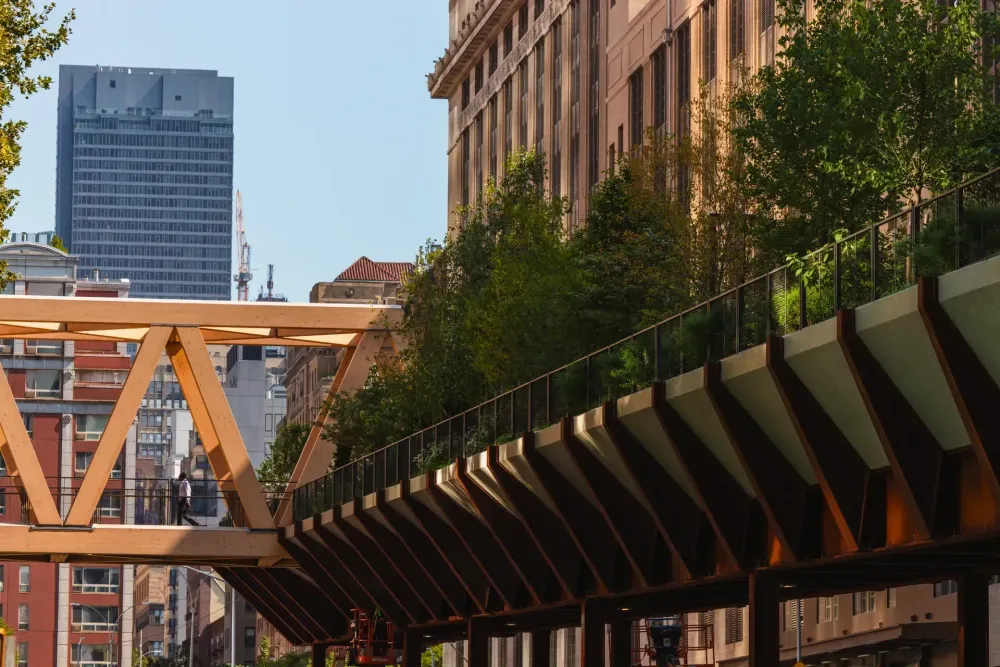
Walk a focused section of the High Line, finish at Chelsea Market and decide whether to add the Whitney. Includes access checks and clear free-versus-paid distinctions.
For a first High Line and Chelsea outing, walk south from West 23rd Street towards West 16th or West 14th Street, then eat at Chelsea Market. This gives you elevated gardens, city views and a clear finish without requiring an end-to-end walk. Add more park or the Whitney only when that is part of the experience you actually want.
The important planning choice is not which direction is universally best. It is where you want to finish, how much walking suits your group and whether you need an elevator. The route becomes easier when you settle those questions before adding food, shopping and a museum reservation.
Our guide to things to do in New York compares different cultural and outdoor experiences. This guide concentrates on one west-side outing, with a practical way to keep it compact.
Choose a walk with a natural ending
| Option | Best for | Editorial allowance | Main trade-off |
|---|---|---|---|
| West 23rd to West 16th/14th, then Chelsea Market | A first taste of the park with food | 2–3 hours including a meal | Only part of the High Line |
| Chelsea Market, then north from West 14th | Eating before walking | 2–3 hours for a selective outing | Decide a northern exit before starting |
| Short High Line section plus Whitney | Outdoor design and an art museum | Half a day or longer | Museum opening and admission need separate planning |
| A longer park walk | Gardens and architecture are the main interest | Allow more than the short route | More walking before a meal or return journey |
Allowances are planning suggestions, excluding the journey from your accommodation. Practical sources were checked on 20 October 2026. Check current park opening, access notices and elevator status before leaving, especially if a step-free route is essential.
Understand what is free and what needs its own booking
The city's Department of Cultural Affairs admission list identifies the High Line as free admission. A commercial walking tour is a separate service; you are paying for guiding or other stated inclusions, not converting the park itself into a paid attraction.
Read a tour description carefully if it combines the High Line, Chelsea Market and a museum. Is food included, or only time to buy it? Does the guide accompany you inside a museum, and is its ticket included? A route name alone does not answer these questions. For a self-directed outing, budget separately for food, transport and any museum admission.
Consult the park's current visitor notices for your date and the individual listing for an organised event. Free admission should not be confused with unrestricted access at any hour or automatic admission to every programme. This guide does not promise a particular seasonal closing time or same-day entry arrangement for special activities.
For other low-cost choices, our free things to do in New York guide distinguishes open public spaces from museum offers with conditions. Keeping those distinctions clear prevents an inexpensive walk from quietly becoming a series of unplanned ticket purchases.
Choose the entrance by access, not just proximity
The High Line sits above street level, so a nearby map pin does not necessarily mean a suitable entrance. The Friends of the High Line shop's current location guidance identifies stairs and elevator access at West 14th and West 23rd Streets, with stair access at West 16th. On the date checked, it warns that the West 16th Street elevator is temporarily closed for repairs.
For our southbound route, plan to enter at West 23rd and leave at West 16th if stairs suit you, or at West 14th if you need elevator access. Confirm the actual elevator status on the day at both ends. An elevator listed on a map may be unavailable, and changing exits can add unwanted walking.
The city's parks accessibility page describes accessible access points and restrooms, but the practical task is to connect your arrival, park entrance, exit and onward journey. Do not treat general accessibility language as proof of a complete route from your hotel.
Give your meeting point a street and a level: “West 23rd Street entrance at street level” is more useful than “on the High Line”. Groups can otherwise wait above and below each other. With a stroller or mobility aid, choose the fallback exit before starting rather than discovering it after someone is tired.
Walk south with time to look
Start around West 23rd Street and settle into a slow pace. Notice the way a narrow railway structure becomes a sequence of planted areas, paths and places to pause. Look down at streets as well as out at buildings: the change in height is part of what makes this park different from a walk on the pavement.
The city's park description identifies its origin on an elevated railway. Let that be a useful question as you move: what remains visible of its earlier function, and how does the planting change your perception of it? You do not need to recognise every architect or plant to enjoy that contrast.
Pause where the path allows other people to pass. A narrow linear park works less well when a whole group stops across the walking line to take photographs. If a viewpoint is busy, keep going and return only if it still matters; a short wait for every photograph can consume the time intended for lunch.
Do not promise a specific artwork, flowering display or water feature based on an older picture. Art and planting change, and seasonal conditions are part of the experience. Choose a few moments of attention rather than trying to reproduce another visitor's complete photo sequence.
As you approach the Chelsea Market area, decide whether to leave at West 16th or continue to West 14th for the planned elevator exit. That is a decision about access and energy, not an obligation to complete the whole park. Continuing south beyond this area is an optional extension with its own return route.
Make Chelsea Market a meal, not another checklist
The market's official visitor page gives the address as 75 Ninth Avenue, between West 15th and West 16th Streets. It is a street-level destination in the same area, not an entrance to every attraction you can see from the High Line. Leave time to descend and walk to the market rather than assuming a direct indoor connection.
Walk through before deciding what to eat, especially when travelling with different tastes. Compare menus, prices, queues and seating rather than choosing solely because a stall has appeared repeatedly online. If a particular business is the reason for coming, check that vendor's own opening hours; the building's published hours do not guarantee every counter operates throughout them.
A food-focused visit can absorb more time than a quick snack. Agree whether the group wants one shared meal, separate purchases or only a drink. Large groups should choose a meeting point before splitting between vendors, and avoid making a tight reservation immediately after an uncertain lunch queue.
The market can also come first. Eat, then use the West 14th Street entrance for a northbound walk towards West 23rd. This works when you arrive hungry or prefer to begin outdoors later. The same principle applies in reverse: decide the exit and onward route before entering the park.
Add the Whitney only if you want a museum
The Whitney is a meaningful addition for an art-focused day, not a compulsory endpoint for every High Line walk. Its official visitor page places it at 99 Gansevoort Street, in the Meatpacking District. Treat it as a separate visit after a street-level walk from the market area, or make it the anchor and fit a shorter park walk around it.
On the date checked, the museum lists Tuesday closure and recommends booking ahead to expedite entry. Read the current ticket options and exhibition programme before choosing a session. Do not assume that a free park visit includes museum admission, or that the conditions of a particular free museum offer apply to everyone at all times.
A museum plus lunch plus the park can readily become a substantial half-day. Shorten the High Line segment if the exhibitions are your main interest. Conversely, omit the museum when you primarily want outdoor design and street life; paying for an interior you will rush through is not an improvement to the outing.
If the weather looks uncertain, secure a museum visit only if you would still enjoy it as the main activity. An available indoor attraction is useful, but availability alone does not make it the right one for your interests.
Keep Chelsea's other stops selective
Chelsea can support a longer afternoon, but “explore the galleries” is too vague to function as a reliable plan. Choose an actual exhibition or gallery, verify its address and visitor arrangements, and add it because the work interests you. Do not promise that every gallery will be open, free or welcoming to walk-ins on the day.
Likewise, a waterfront extension or shopping stop should have a clear purpose. Ask what it adds beyond the walk and meal you already chose. If the answer is merely that it is nearby, a pause may be the better use of the time.
For mixed-interest groups, agree one optional extension and a meeting point. Someone can spend longer over food while another visits a chosen interior, provided the arrangement suits everyone. Keep enough flexibility that the least energetic person does not have to complete a route designed for the keenest walker.
Adjust for weather and the rest of the day
The elevated park is an outdoor experience. Check the forecast and dress for wind, rain or sun rather than for an entirely indoor sightseeing day. If conditions make the walk unpleasant, shorten it or stay with a meal and an independently available interior; do not force a full route to justify coming to the neighbourhood.
For families, let children know that the outing is a shared walking path, not a promise of a large play lawn. Check current park rules before bringing recreational equipment. A shorter section with interesting things to notice may work better than a long end-to-end walk followed by a hungry search for food.
The market's visitor page identifies the A, C, E and L services at the 14th Street/Eighth Avenue station complex for reaching its area. Check current service and the exact accessible entrance if needed; a line name alone is not a complete journey plan. For the West 23rd start, route to the actual High Line entrance from wherever you are staying.
The New York three-day itinerary helps place this outing alongside the rest of the city. Keep one main purpose, one meal and one optional extension. You can enjoy the High Line without turning every nearby attraction into part of the same afternoon.
Cover photograph: An elevated section of the High Line with planting, a timber bridge and surrounding New York buildings. Photo by Brent Singleton — Pexels.
Frequently Asked Questions
Is the High Line free?
New York City's cultural-affairs listing identifies free admission. Guided tours, purchases and nearby museums are separate; check current park notices and conditions for any organised event.
Do I need to walk the entire High Line?
No. A southbound section from West 23rd to West 16th or West 14th works with Chelsea Market. Choose the exit according to current access, your walking tolerance and your next stop.
Which exit should I use for Chelsea Market with an elevator?
Check West 14th Street's elevator status. The official shop guidance lists West 16th as stair access and warns its elevator is temporarily closed for repairs on the check date. Verify both entrance and exit again before travelling.
Does the High Line visit include the Whitney?
No. The Whitney at 99 Gansevoort Street has separate entry and opening arrangements. Choose it for its exhibitions and plan the park walk around the museum if that is your priority.
How much time should I allow for the walk and market?
Use 2–3 hours as an editorial allowance for the short section, pauses and a meal, excluding travel. Add more for a museum, a longer park route or substantial time browsing the market.

Keep Exploring
Singapore Botanic Gardens: Plan Your Visit
Choose your entrance, orchid visit or family route at Singapore Botanic Gardens, with current access rules and practical ways to plan a shorter outing.
Gardens by the Bay: Choose Your Visit
Plan Gardens by the Bay around the experience you want: compare the conservatories and aerial views, choose an arrival point and leave time for the evening show.
Chapultepec Park: Choose Your Day Out
Plan Chapultepec by geography: choose a castle-and-lake route, a museum day along Reforma or an outing farther west, without confusing park access with attraction tickets.