
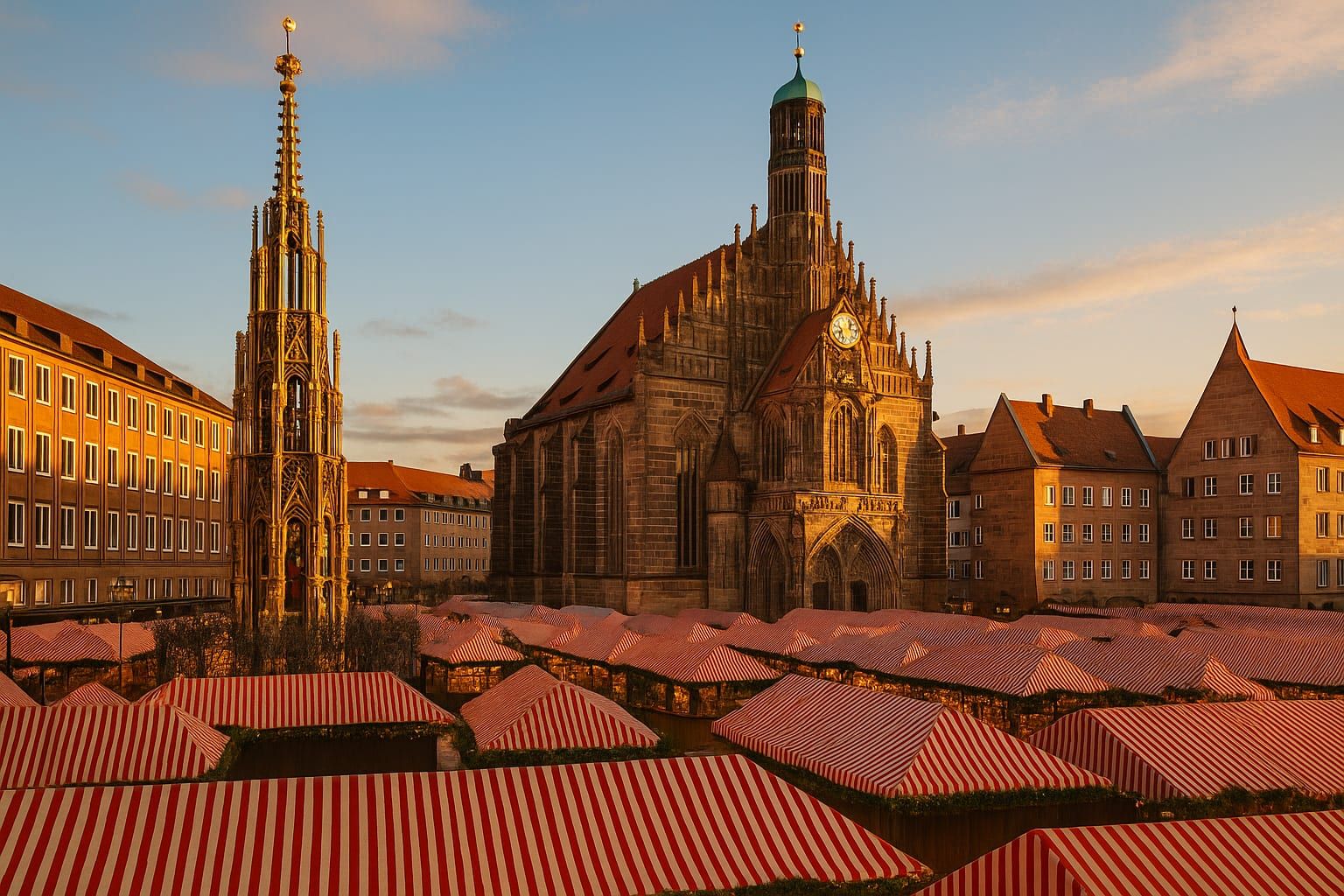
Experience the original German Christmas market at Nuremberg’s Christkindlesmarkt: medieval charm, wooden stalls, gingerbread, Glühwein and centuries of tradition in the heart of Bavaria.
Nuremberg Christkindlesmarkt — Germany’s Most Famous Christmas Market
Few places capture the spirit of a German Christmas like the Nuremberg Christkindlesmarkt. Held each Advent on the Hauptmarkt in Nuremberg’s medieval Old Town, this market is not only one of Germany’s oldest and most famous but also a nearly universal symbol of the festive season: about two million people visit each year to wander the little wooden stalls, smell roasting chestnuts and sip steaming Glühwein beneath the glow of fairy lights.
In this guide you’ll find the market’s history, what to see and eat, practical tips for visiting, and local insights that will help you make the most of a trip to the heart of Franconia at Christmastime.
A brief history: why it matters
The tradition of a Christmas market in Nuremberg stretches back centuries — the Christkindlesmarkt in its modern form is rooted in long-standing medieval trade fairs and public markets that took place around the Nativity season. The figure of the Christkind (a gift-bearing angelic child) was introduced to the Nuremberg market in the 1930s and today plays a central ceremonial role: every other year a young local woman is chosen to be the Christkind, and she opens the market from the balcony of the Frauenkirche (Church of Our Lady) with a traditional prologue.
The event’s reputation for authenticity is reinforced by its tightly controlled aesthetic: the wooden booths and string lights create what the official site calls "a little city of wood and cloth," and many vendors still sell hand-made crafts and locally produced food that reflect regional traditions.
Where and when
- Location: Hauptmarkt, Nuremberg Old Town — the market sprawls around the square in front of the Frauenkirche and stretches into adjacent streets and squares.
- Typical dates: late November through December 24. The market culminates on Christmas Eve when most stalls close early; the opening ceremony traditionally takes place on the Friday before Advent begins.
- Size & visitors: one of Germany’s largest and most popular markets, attracting around two million visitors annually.
Note: specific dates shift each year, and occasionally the market adapts format or crowd-management measures. Always check the official Christkindlesmarkt website before you travel.
What to see and do
H3: The Opening Ceremony and the Christkind
The opening ceremony is one of the market’s most iconic moments. The Christkind descends to the balcony of the Frauenkirche and recites a prologue that draws crowds and sets a magical tone for the season. If you want to witness it live, arrive very early or watch from a nearby street.
H3: The Wooden Booths and Local Crafts
Strolling the rows of red-and-white striped wooden stalls is the heart of the experience. Expect high-quality handmade goods: pewter and woodcarvings, glass ornaments, nutcrackers, embroidered linens and traditional toys. Look for regional specialties — authentic Franconian craftwork is what separates Nuremberg from commercialized, international markets.
H3: Food & Drink — what to try
- Nürnberger Lebkuchen: Nuremberg gingerbread is famous — try several styles (soft, glazed, or heart-shaped decorated cookies) from multiple bakers to compare flavors.
- Nürnberger Rostbratwurst: tiny, intensely spiced bratwurst grilled over beechwood embers and traditionally served three to a roll. They’re a lunchtime staple at the market.
- Glühwein & Feuerzangenbowle: mulled wine is obligatory; you’ll also find Feuerzangenbowle (rum-soaked sugar cone set alight over wine) at special stalls — dramatic and warming.
- Roasted chestnuts, potato pancakes (Reibekuchen), and sweet treats like Schupfnudeln or Stollen round out the offerings.
Many stalls have reusable mug deposits (Pfand), so if you want a souvenir keep the mug; otherwise return it to get your deposit back.
H3: Kinderweihnacht (Children’s Christmas Market)
Nuremberg’s market is family-friendly and features a dedicated children's quarter with a vintage carousel, puppet shows, a miniature steam train and craft workshops. It’s a quieter, more playful corner of the market and perfect for visitors with kids.
H3: Special events and themed corners
Look for daily musical performances, Advent concerts, and torchlight parades. There’s also a “Sister Cities” corner where crafts from Nuremberg’s partner cities are showcased — a nice way to see globally inspired Christmas traditions.
Practical tips for visiting
H3: Timing & crowds
- Best times: Weekday mornings and early afternoons are far less crowded than evenings and weekends. If you can, visit on a weekday and arrive right when stalls open.
- Avoid peak times: the weekend before Christmas and late afternoons are busiest. If you want to take photos without shoulder-to-shoulder crowds, go early or on a weekday.
H3: Getting there & transport
Nuremberg is compact and the Hauptmarkt is an easy walk from Nuremberg Hauptbahnhof (the main train station). The city’s U-Bahn/tram network also stops close to the Old Town — public transport is convenient and recommended rather than driving. If you do drive, be aware that parking near the Old Town is limited and often charged.
H3: Money & payments
Many stalls accept card for larger purchases, but smaller food stalls and craft vendors prefer cash. Bring enough euros for snacks and small purchases; ATMs are available in the Old Town but lines can form on busy days.
H3: What to wear
December in Nuremberg is cold — layers, a warm coat, waterproof shoes and sensible hats/gloves are essential. If you plan to move between indoor museums and outdoor stalls, a light backpack for layering is useful.
H3: Accommodation & booking
Book early: hotels fill up quickly during Advent, and prices rise as December progresses. Consider staying a short tram ride outside the Old Town for better rates. If you’re visiting multiple markets, Nuremberg is also a good base for day trips to Rothenburg ob der Tauber or Bamberg.
H3: Safety & accessibility
The market is family-friendly and generally safe, but like any crowded tourist area, watch your belongings. The market team and local police maintain a visible presence. Accessibility varies by stall; some streets are cobbled and can be uneven for wheelchairs or strollers — check ahead if accessibility is a concern.
Local insights and lesser-known tips
- Start with breakfast in the Old Town: Many local cafés serve excellent strong coffee and regional pastries; fueling up early gives you more stamina for wandering and shopping.
- Taste-test across vendors: Lebkuchen can vary dramatically in spice and texture. Try a few stalls rather than buying the first perfect-looking heart you see.
- Bring a re-usable tote: if you plan to shop for crafts, a lightweight bag will save you from juggling packages while navigating crowds.
- Look beyond the Hauptmarkt: side streets and smaller squares often hide specialty food stalls and artisan makers with fewer tourists.
- Buy meats and baked goods from local producers: many stalls sell small-batch smoked meats, sausages and baked goods you won’t find outside Franconia.
Sample one-day Christkindlesmarkt itinerary
- Morning: Arrive early, enjoy breakfast near the church, then wander the booths while it’s still quiet. Buy a freshly baked Lebkuchen and a morning Glühwein (or hot chocolate).
- Late morning: Visit the Kinderweihnacht area if you have children, or explore craft stalls for ornaments and wooden toys.
- Lunch: Nürnberger Rostbratwurst with mustard from a grill stall — pair with a local beer if you prefer.
- Afternoon: Pop into the nearby Albrecht Dürer House and the Kaiserburg (Imperial Castle) for culture and views over the Old Town.
- Evening: Return to the Hauptmarkt for dinner from street-food vendors, listen to live music and watch the market glow after sunset.
Combining the market with a wider Christmas trip
Nuremberg is an excellent hub for a holiday itinerary featuring several of Europe’s iconic Christmas markets. If you’re planning a longer trip, compare Nuremberg’s traditional charm with other markets in our Europe guide: Best Christmas Markets in Europe: Your Complete 2025 Guide.
If you love the fairy-tale feel of Alsace, consider continuing to Colmar’s markets for a more intimate, storybook experience: Colmar Christmas Markets 2025: A Fairytale in Alsace. For a grand, imperial atmosphere, Vienna’s markets are a complementary stop: Vienna Christmas Markets 2025: Complete Guide to the Imperial City.
Shopping advice: what to bring home
- Edible treats: sealed tins or boxes of Lebkuchen travel well and are an authentic gift. Avoid unsealed perishable goods if you’re flying.
- Ornaments & crafts: choose hand-made woodwork, pewter ornaments and traditional nutcrackers — they’re sturdy and memorable.
- Local specialties: mustard, preserved meats (vacuum-packed), and bottled Glühwein spice mixes make distinctive gifts.
Pack purchases carefully to avoid breakage — bubble wrap and clothing can be useful for padding fragile items in your luggage.
Final thoughts
The Nuremberg Christkindlesmarkt delivers a concentrated dose of German Christmas tradition: the smell of spices and roasting fires, the craft stalls echoing centuries of local artisanship, and a ceremonial opening that ties modern visitors to a long cultural thread. Whether you come for the food, the shopping or simply to soak in the atmosphere, plan ahead for crowds, dress warmly, and allow time to wander. Arrive with curiosity and a slow pace — the best finds at Nuremberg are often discovered by taking your time.
If you’re visiting multiple markets, remember that each has its own character. For a curated list of other top markets across Europe, see our comprehensive guide mentioned above, or explore nearby Alsace and Vienna for delightful contrasts.
Happy travels — and Frohe Weihnachten from Nuremberg’s Hauptmarkt!
Related
Keep Exploring
Greek Islands: Which One Is Right for You?
From party islands and luxury escapes to quiet villages and family-friendly beaches, this guide helps you match your travel style to the perfect Greek island — with practical tips and sample itiner...
Summer in Scandinavia: Midnight Sun Magic
Experience Scandinavia’s Midnight Sun: where and when to go, best activities from hiking to whale-watching, local festivals, photography tips, packing advice and safety notes.
Cherry Blossoms in Europe: Best Spots
A practical guide to Europe's top cherry blossom spots — when to go, where to find the best tunnels and parks, local tips, and photo-perfect viewpoints from Bonn to Stockholm.