
Discover Šiauliai’s iconic Hill of Crosses and the surprising cultural highlights of Lithuania’s north: museums, local flavours, practical tips and how to plan your visit.
Šiauliai: The Hill of Crosses and Beyond
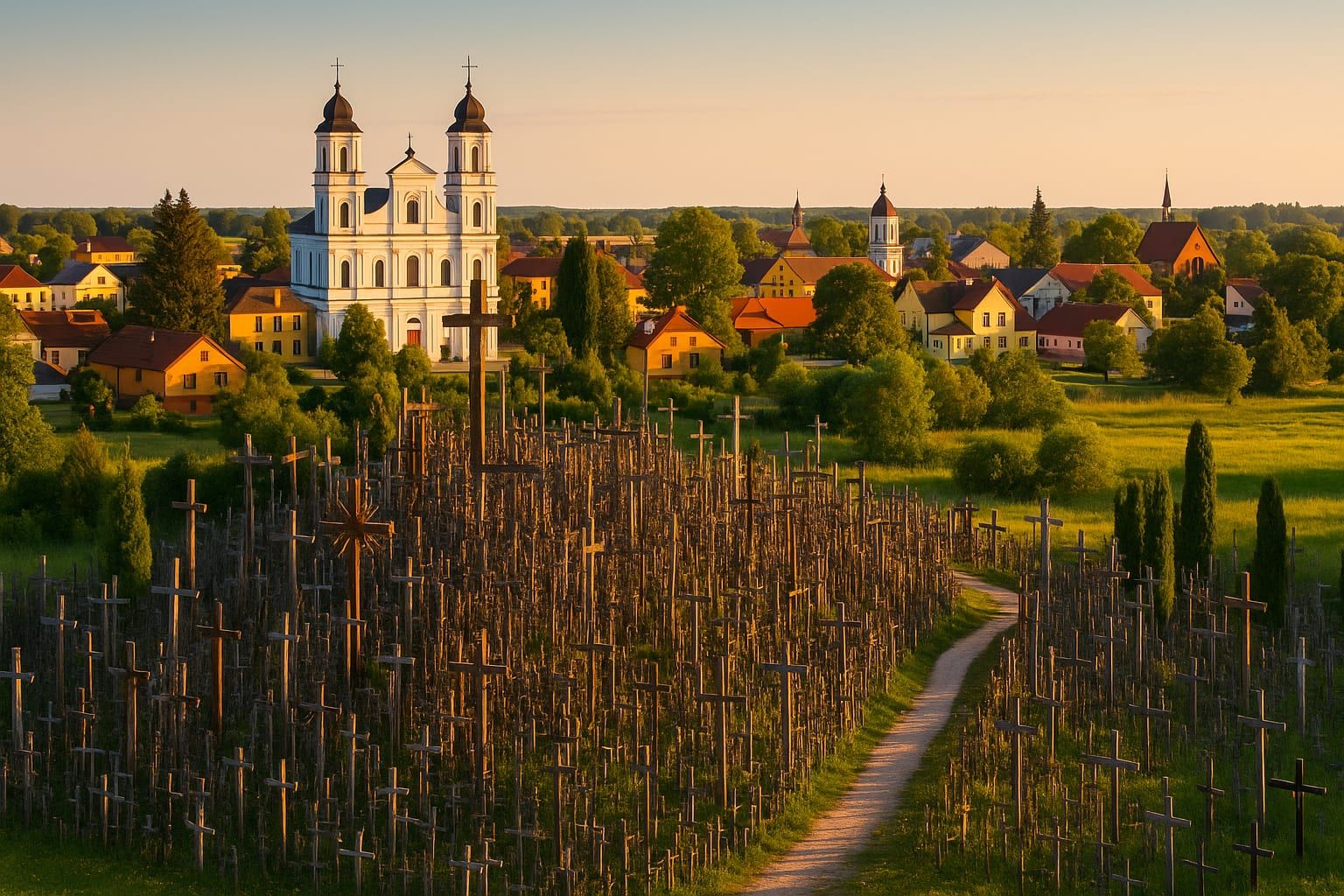
The Hill of Crosses (Kryžių Kalnas) is one of Lithuania’s most powerful, photogenic and slightly uncanny pilgrimage sites — a hill covered in tens of thousands of crosses, rosaries and devotional items that rises out of the flat northern plains about 12 km north of Šiauliai. But Šiauliai is more than the hill: the city offers an intriguing mix of local culture, curious museums and a low-key gateway to northern Lithuania.
This guide will help you plan a respectful visit to the Hill of Crosses, suggest what to see in Šiauliai, and give practical tips, local insights and itinerary ideas so you get the most from a day trip or overnight stay.
Why the Hill of Crosses matters
The Hill of Crosses is a living shrine. For more than a century, Lithuanians have been placing crosses here as acts of faith, remembrance and national identity. Under Tsarist rule, during two world wars and through decades of Soviet occupation (when authorities repeatedly removed the crosses), people quietly continued to return and replace them. This persistence turned the hill into a potent symbol of cultural survival and spiritual resilience.
In 1993 Pope John Paul II visited the site and called it a place of pilgrimage, further raising its international profile. Today the hill is covered with wooden and metal crosses, crucifixes, rosaries and small memorial plaques — a layered, textured landscape that is at once solemn, beautiful and strangely exuberant.
Getting to the Hill of Crosses
- Location: about 12 km north of the centre of Šiauliai.
- By car: the drive from Šiauliai’s centre takes roughly 15–20 minutes. From Vilnius expect about 2.5–3 hours by car; from Riga around 2–3 hours depending on traffic.
- By public transport: regular minibuses and local buses run from Šiauliai’s central bus station to the hill. Timetables change seasonally, so check at the bus station or online. Many travellers find it easiest to take a short taxi or rideshare from Šiauliai.
- Tours: you can join guided day tours from Vilnius, Kaunas or Riga that include transport and a local guide.
If you’re arriving as part of a longer Baltic road trip, the hill is an easy stop between Riga and Vilnius — a striking detour that rewards a half-day visit.
What to expect at the Hill of Crosses
- Scale and atmosphere: the hill contains thousands — widely reported as tens or hundreds of thousands — of crosses of all sizes. There are also small chapels, statues and religious icons.
- Accessibility: paths are mostly compacted earth and gravel. The main area is approachable by most visitors but can be uneven and muddy after rain. There are boardwalks and paved approaches near the entrance and chapel.
- Facilities: a visitor centre and small stalls sell souvenirs, rosaries and crosses (helpful if you want to add a cross). Basic toilet facilities are available near the entrance.
- Photography: photos are allowed, but be mindful of anyone praying or holding a private moment of devotion.
Adding a cross
If you wish to add your own cross or devotional item, you can buy one at the site or bring a small respectful item. There’s no formal ceremony — simply place it in the designated areas or seek guidance from staff if available. Many visitors make a quiet wish or prayer as they place a cross.
Etiquette and safety
- Respect: treat the site as you would any place of worship. Avoid loud behaviour, don’t climb on crosses and don’t remove or rearrange others’ offerings.
- Modesty: dress modestly if you plan to enter chapels or pray — there are pilgrims of all faiths here.
- Leave no trace: don’t leave trash; use bins or take rubbish with you.
Best time to visit
- Light and atmosphere: early morning and late afternoon (golden hour) are the best times for photography and quieter contemplation.
- Seasons: summer sees the largest crowds; winter is stark and atmospheric, with snow adding a haunting quiet. Religious holidays (e.g., Easter, All Saints’ Day) draw pilgrims and can be very busy.
Šiauliai city — what’s beyond the hill
The town of Šiauliai is an accessible, friendly regional centre with a few surprising attractions worth a stroll.
The Devils’ Museum
One of Šiauliai’s most curious draws is the Devils’ Museum — a collection of carved, painted and sculpted devils from Lithuania and around the world. It’s quirky, folk-art rich and surprisingly thought-provoking: the “devil” motif in Lithuanian folk culture can be playful, satirical and symbolic rather than purely sinister. Expect hundreds to thousands of figures in a compact, well-curated space.
Šiauliai Cathedral and city centre
Šiauliai’s cathedral (dedicated to Saints Peter and Paul) anchors the city’s modest historic centre. Wander the pedestrian streets, pop into a café for a coffee and cake, and watch local life unfold. The city is compact and walkable, making it easy to see highlights in a few hours.
Local museums and memorials
Šiauliai has municipal museums that explore the city’s history, industry and cultural life. For those interested in everyday Lithuanian history — Soviet-era life, regional crafts and wartime stories — a short museum visit adds depth to the Hill of Crosses experience.
Parks and green spaces
If the weather is fair, bring a picnic or look for a nearby park. Northern Lithuanian landscapes are gently rolling, with forests and lakes within short drives — ideal if you want an afternoon of fresh air after a morning pilgrimage.
Food and drink — what to try in Šiauliai
Šiauliai’s restaurants serve classic Lithuanian dishes and contemporary takes on Baltic cuisine. Look for:
- Cepelinai: potato dumplings usually stuffed with spiced meat and served with sour cream and crispy bacon bits.
- Šaltibarščiai: chilled beetroot soup with kefir, a summer staple that’s bright pink and wonderfully refreshing.
- Kugelis: a baked potato pudding, often served with sour cream.
- Šakotis: a traditional spit cake commonly seen at celebrations — a crunchy, tree-like cake that’s fun to share.
Coffee culture is growing: you’ll find independent cafes serving good espresso and filter coffee along the main streets. For an authentic experience, find a family-run place serving home-style Lithuanian meals.
Itineraries and how to fit Šiauliai into your Baltic trip
- Half-day: Hill of Crosses (1–2 hours) + walk around Šiauliai centre, coffee and the Devils’ Museum.
- Full day: Hill of Crosses, Devils’ Museum, a museum visit, lunch and a short nature walk nearby.
- Overnight: stay in Šiauliai to break up a drive between Riga and Vilnius or to explore the countryside. Use Šiauliai as a quiet base to unwind after busier Baltic capitals.
If you’re planning longer regional travel, Šiauliai pairs well with city breaks in Vilnius and Riga. See our practical itineraries for ideas: try a short city stay in Vilnius (ideal as a base for eastern Lithuania) at /en/itineraries/weekend-vilnius-48-hours-baroque-capital, or combine Šiauliai with a Baltic leg that includes Riga — a short trip away and a cultural contrast — with tips at /en/itineraries/3-days-riga-art-nouveau-capital.
Practical travel tips
- Currency & payment: Lithuania uses the euro (EUR). Many places accept cards, but it’s handy to carry some cash for small purchases at the Hill of Crosses stalls or rural cafés.
- Language: Lithuanian is the official language. English is commonly spoken in tourist locations and among younger people; learning a few basic Lithuanian phrases is appreciated.
- Opening hours: the Hill of Crosses is open year-round (it’s an outdoor site). Museum opening hours vary seasonally — check ahead online or at Šiauliai’s tourist information.
- Time to allow: plan 1–2 hours at the Hill of Crosses; add 2–4 hours for Šiauliai city attractions.
- Safety: the area is safe and tourist-friendly. Use normal precautions for any urban travel (watch your belongings in crowded places).
- Photography: respect private prayers; avoid intrusive close-ups of people without permission.
Local insights and mindful ways to experience the site
- Bring a small token if you plan to leave something — a simple wooden cross, ribbon or rosary is traditional. If you’d rather not leave anything, a silent reflection or a moment of gratitude is perfectly appropriate.
- Talk to locals: many Šiauliai residents have family stories tied to the hill. Conversations can reveal personal layers of history — why certain crosses are placed where they are, or the memory of past removals and returns.
- Visit the chapel: there are small chapels and shrines on the hill where services or quiet prayers occur. If a service is taking place, stand back respectfully.
- Consider a guide: a local guide can add historical context — from the medieval significance of the hill’s location through the Soviet-era struggles to contemporary pilgrimage practices.
Responsible travel notes
The Hill of Crosses is a living cultural and religious site — not merely a photo opportunity. Approach it with curiosity and humility. Support local businesses by buying a cross or a rosary at the site, eating in town and, if you use a guide, choosing a licensed local guide.
Final thoughts
Šiauliai’s Hill of Crosses is hard to forget: an extraordinary landscape of intimate, personal objects accumulated into a collective monument. When paired with Šiauliai’s idiosyncratic museums, friendly cafés and the slower pace of northern Lithuania, it makes for a meaningful detour off the usual Baltic circuit.
Whether you come to place a cross, to photograph a unique pilgrimage site, or simply to explore an often-overlooked corner of Lithuania, Šiauliai rewards visitors who take the time to listen, look and respect the stories embedded in this remarkable place.
Happy travels — and if you’re mapping a longer Baltic route, consider linking Šiauliai into a Vilnius or Riga itinerary for contrast and context (see /en/itineraries/weekend-vilnius-48-hours-baroque-capital and /en/itineraries/3-days-riga-art-nouveau-capital).
Keep Exploring
Lviv: Ukraine's Most European City
Discover Lviv's Austro‑European charm, top sights, coffee culture and practical safety advice. Learn when it's wise to visit and how to travel responsibly.
Debrecen: Hungary's Reformed Capital
Explore Debrecen — Hungary’s Reformed Capital. From the towering Great Reformed Church and Hortobágy plains to thermal baths, kolbász and student cafés, here’s your practical guide.
Szeged — Hungary's Sunshine City
Discover Szeged, Hungary’s City of Sunshine: sun-drenched squares, Art Nouveau architecture, paprika-rich cuisine, open-air festivals, thermal baths, and smart travel tips.