
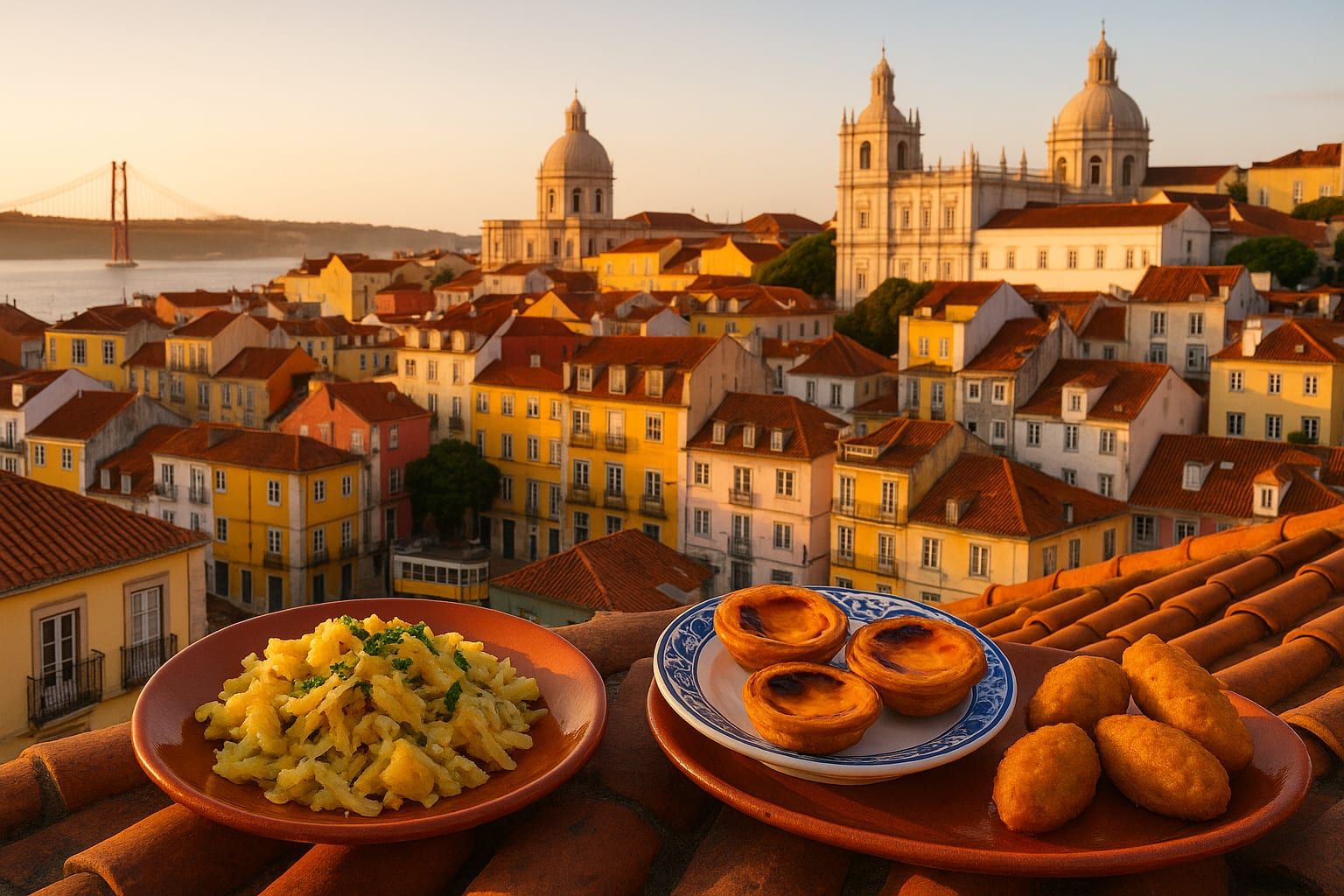
A comprehensive Lisbon food guide to bacalhau, pastéis de nata and bacalhau, petiscos, markets and where locals eat — with practical tips, sample food crawls and neighborhood picks.
Lisbon Food Guide: Bacalhau, Pastéis & More
Lisbon is a city of hills, yellow trams and an indefinable salty-sweet aroma coming from kitchens across the city. Food here is both simple and endlessly inventive: salted cod transformed into comforting classics, flaky custard tarts famed the world over, and tiny taverns where plates of petiscos keep the wine flowing late into the night.
This guide breaks down what to eat, where to go, and practical tips so you can eat like a Lisboeta — whether you have one day or a week. If you plan to continue north after Lisbon, pair this with our Portugal road-trip itinerary: /en/itineraries/one-week-portugal-lisbon-to-porto-road-trip and explore Porto’s distinct culinary scene at /en/local-culture/porto-food-guide-traditional-portuguese-cuisine.
Must-try Lisbon dishes (quick list)
- Bacalhau (dried salted cod) — many classic preparations
- Pastéis de nata — the iconic custard tart
- Pastéis de bacalhau — cod fritters (often with queijo)
- Bifana — garlicky pork sandwich
- Prego — steak sandwich
- Sardines (grilled) — especially in summer
- Petiscos — Portuguese tapas-style small plates
- Fresh seafood — clams, octopus, percebes (gooseneck barnacles) in season
- Cozido à Portuguesa — hearty meat and vegetable stew
- Ginjinha — sour cherry liqueur
Bacalhau: Portugal’s culinary backbone
What is bacalhau?
Bacalhau is dried, salted cod. Historically, drying and salting allowed cod to be stored and transported — the result is a product that is central to Portuguese identity. There’s a joke that Portugal has 365 bacalhau recipes, one for each day of the year; the truth is as many families have their own take.
Popular bacalhau dishes to order
- Bacalhau à Brás: shredded/flake cod mixed with matchstick potatoes, onion, eggs, olives and parsley — creamy and comforting.
- Bacalhau com Natas: cod baked in a cream sauce with potatoes; rich and indulgent.
- Bacalhau à Gomes de Sá: casserole with potatoes, eggs, onions and olive oil — from Porto but common in Lisbon.
- Grilled or baked bacalhau steaks: when the dish emphasizes quality fish and simple seasoning.
Where to try bacalhau in Lisbon
Look for traditional tascas (neighborhood taverns) and specialty restaurants. Past and present favorites include family-run places in Alfama, Mouraria and the Baixa. Seafood restaurants along the waterfront (Cais do Sodré, Belém) also serve excellent preparations. For a focused bacalhau experience, seek out restaurants that include it on multiple ways on the menu.
Local insight: bacalhau is common at Sunday family lunches and holidays. Don’t be surprised if you see it on many menus — each restaurant will have a signature twist.
Pastéis: de nata and de bacalhau
Pastéis de nata (custard tarts)
A Lisbon pilgrimage for food lovers is Pastéis de Belém (Belém), where the original recipe is jealously guarded. A perfect pastel de nata has a caramelized top, a silky egg-custard interior, and a crisp, flaky shell. Eat them warm with a dusting of cinnamon.
Tips:
- Buy fresh: a pastel is best within an hour of baking.
- Expect lines at Pastéis de Belém — they move quickly and the coffee in the café is decent.
Pastéis de bacalhau (cod fritters)
These are savory, deep-fried cod cakes often mixed with mashed potato and a little cheese. Served as petiscos or as a quick snack with a beer, they’re a quintessential Lisbon bite.
Where to get them: look for them in tavernas, fish restaurants and at lunchtime in markets.
Seafood, markets and where to eat fresh
Markets to visit
- Time Out Market (Mercado da Ribeira): A modern food hall with top chefs and small stalls, great if groups have different tastes.
- Mercado de Campo de Ourique and Mercado de Arroios: neighborhood markets with fresh fish stalls and small eateries.
- Mercado da Ribeira (original stalls): early morning fish markets are lively and authentic.
Markets are also excellent places to sample regional cheeses, olives, smoked fish and seasonal fruits. If the market cuisine suits you, order dishes that highlight the fresh catch of the day.
Seasonal seafood to watch for
- Sardines: grilled and served at summer festivals (and many restaurants).
- Octopus: try polvo à lagareiro (roasted with garlic and olive oil) or slow-cooked versions.
- Clams and shellfish: arroz de marisco (seafood rice) and stews are great for sharing.
- Percebes: expensive but prized — best in specialist seafood restaurants.
Local insight: seafood is freshest in the morning markets, and the catch can vary by season. If you want oysters or raw seafood, check the stall or restaurant’s handling reputation.
Petiscos, tascas and casual eats
Petiscos are Portugal’s answer to tapas — small plates meant for sharing. Order a few dishes and a bottle (or carafe) of vino verde or a pitcher of sangria.
Tascas are modest, often family-run taverns where the menu is seasonal and the prices honest. These are where locals go after work for a plate of clams, a bowl of caldo verde (kale soup), or a braised meat.
Popular petiscos to try:
- Chouriço assado (flaming sausage)
- Ameijoas à Bulhão Pato (clams in garlic, coriander, and white wine)
- Peixinhos da horta (green beans fried in batter)
- Queijo e enchidos (cheese and cured meats)
Tip: when a place looks densely populated with locals and lacks a big English menu, it’s often a sign of authenticity.
Sandwiches & street food: bifana, prego and more
- Bifana: thin slices of marinated pork in a soft roll — garlicky and slightly spicy. A classic quick lunch and perfect washed down with a cold beer.
- Prego: a steak sandwich often served with mustard or garlic; sometimes with an egg on top.
- Petiscos stalls and kiosk-style shops: pick up cod fritters, pastries or simple seafood bites on the go.
Budget traveler tip: bifana stands and small snack bars are the go-to for filling eats under €5–€8.
Drinks, desserts and sweet treats
- Ginjinha: a sour cherry liqueur typically served in a small shot glass. Try it near Rossio or in Bairro Alto.
- Port and regional wines: Portugal’s wines vary by region — try vinho verde for a crisp, youthful white or a Douro red for structure.
- Convent sweets: Portugal has a rich conventual pastry tradition — overly sweet to some but delightful if you have a sweet tooth.
Coffee culture: Portuguese coffee is strong and commonly served as an espresso (bica). Expect quick, efficient cafés and a relaxed pace for lingering over a pastel.
Where to eat by neighborhood
Alfama & Mouraria
Best for traditional fado houses and tascas. Expect bacalhau preparations, grilled fish and family-run restaurants where the menu is seasonal. Great for an atmospheric dinner with live fado.
Baixa & Chiado
Central neighborhoods with a mix of tourist-friendly restaurants and hidden locals’ spots. Good for sampling petiscos and trying a classic bifana lunch.
Bairro Alto & Cais do Sodré
Bairro Alto is nightlife and small-plate hopping; Cais do Sodré has a lively riverside strip with seafood restaurants and trendy bars. A good area for late dinners and drinks.
Belém
Head to Belém specifically for Pastéis de Belém and for riverside seafood. Combine with visits to monuments and the riverside promenade.
LX Factory
A creative complex with pop-up restaurants, bakeries and coffee shops. Good for a relaxed lunch or brunch and for trying inventive modern takes on Portuguese classics.
Local insight: sidewalks and plazas are great for people-watching while you sip coffee or share plates. On hot summer evenings, the riverside in Cais do Sodré is lively and atmospheric.
Sample food crawls (1 day and 3 days)
One-day highlights (fast-paced)
- Morning: Pastéis de Belém for a warm pastel de nata and coffee.
- Late morning: Stroll Alfama, stop at a tasca for a small plate and a glass of vinho verde.
- Lunch: Bifana sandwich in Baixa or Campo de Ourique market.
- Afternoon: Time Out Market for several small tastings.
- Evening: Seafood dinner at Cais do Sodré or a fado dinner in Alfama; finish with ginjinha in Rossio.
Three-day deep dive
- Day 1: Markets and neighborhoods — Campo de Ourique, Chiado and a fado night in Alfama.
- Day 2: Belém pastries and riverside seafood, then LX Factory for modern eats and coffee.
- Day 3: Petiscos crawl through Bairro Alto and Cais do Sodré; try different bacalhau dishes at two restaurants.
Practical tips & local insights
- Opening hours: Lunch typically 12:30–14:30; dinner usually 19:30 onward. Many bakeries are open early; markets open in the morning.
- Tipping: Not mandatory — 5–10% is appreciated for good service. Many locals round up the bill.
- Price expectations: A pastel de nata €1–2; bifana €3–6; casual petiscos €3–8 per plate; sit-down seafood meal €15–35 per person depending on restaurant.
- Language: Portuguese is the language; most restaurant staff in central areas speak English. Useful phrases: "Bom apetite" (enjoy your meal), "A conta, por favor" (the bill, please).
- Dietary needs: Lisbon is increasingly vegan/vegetarian-friendly; seafood and meats dominate traditional menus. Ask about olive oil and anchovy-based sauces if you avoid fish.
- Hygiene: Portugal has high food safety standards. For raw or shellfish dishes, choose reputable spots and busy markets.
- Reservations: For popular fado houses and well-known restaurants (especially in Belém and Bairro Alto) book ahead, especially on weekends.
- Avoiding tourist traps: If a place’s menu is overwhelmingly English-only and prices are high, scan nearby side streets for smaller tascas filled with locals.
Final recommendations
Eat widely: mix iconic stops (Pastéis de Belém, Time Out Market) with neighborhood tascas and market stalls. Let your nose guide you — the best places often smell like garlic, olive oil and sizzling fish. If you're continuing north, compare Lisbon's bacalhau and seafood traditions with Porto’s culinary character on our Porto guide /en/local-culture/porto-food-guide-traditional-portuguese-cuisine.
Lisbon is humble on the surface and endlessly generous at the table. Whether you’re savoring a warm pastel at dawn or lingering over petiscos with a carafe of wine as the tram bells ring in the background, the city’s food will stay with you long after you leave.
Buen proveito—or, as the Portuguese say, Bom apetite!
Keep Exploring

Wine Tasting in Bordeaux: Complete Guide
Everything you need to plan the perfect Bordeaux wine-tasting experience: regions, top châteaux, how to taste, booking tips, transport, seasonality and local insights.
Cooking Classes in Italy: Florence, Rome & Beyond
Learn to make pasta, pizza, gelato and regional classics with hands-on classes in Florence, Rome and beyond — market tours, agriturismo experiences and practical tips.

Best Gelato in Italy: City-by-City Guide
A tasty city-by-city guide to Italy’s best gelato: top shops, regional flavors, how to pick an artisan gelateria, and local tips to make every scoop memorable.