
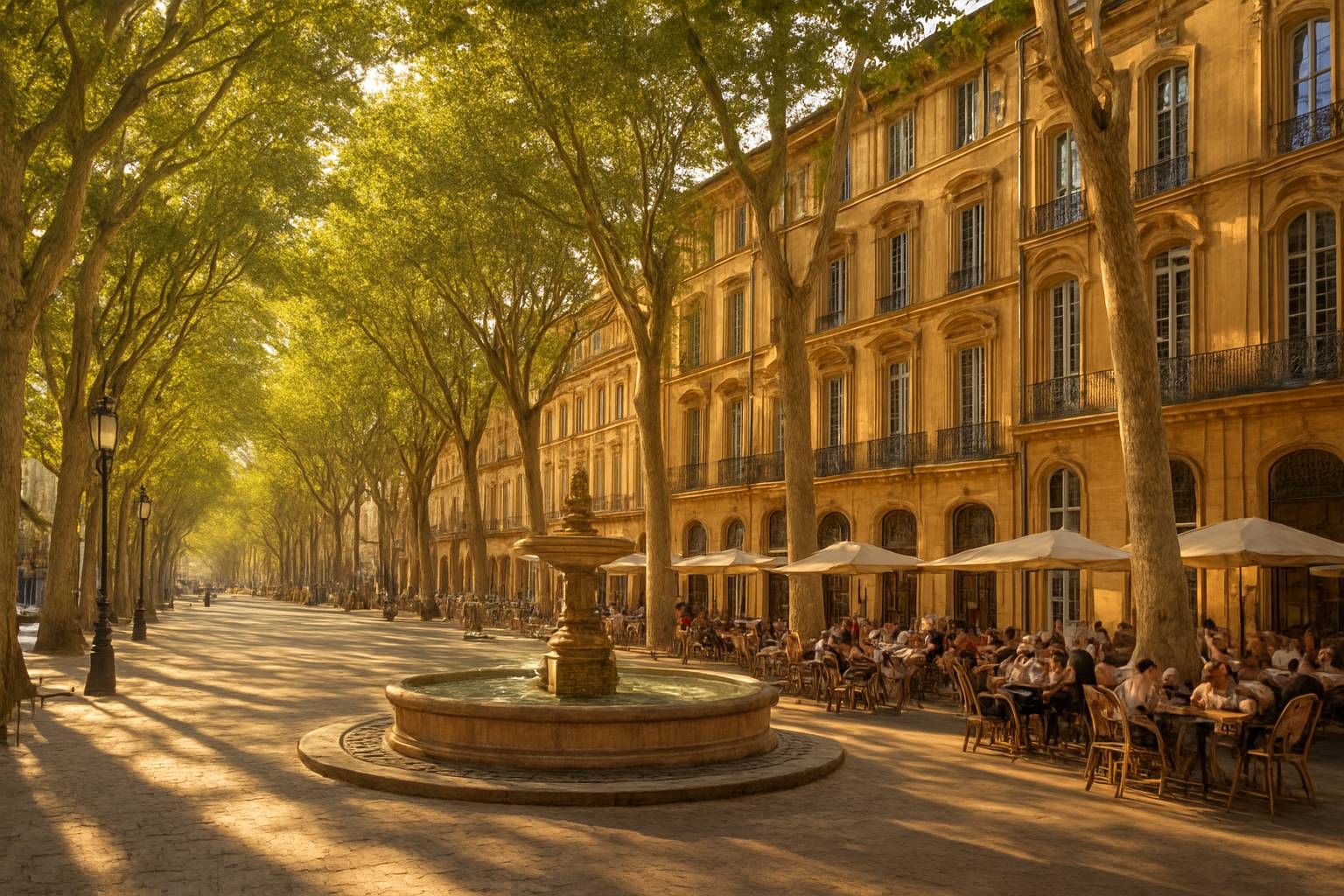
Viali con fontane, la luce di Cézanne e i migliori mercati del sud della Francia. Scopri perché Aix è il segreto più raffinato della Provenza.
Aix-en-Provence: The Elegant Heart of Provence
Fountain-lined boulevards, Cézanne's light, and the best markets in southern France. Discover why Aix is Provence's most refined secret.
There's a reason Paul Cézanne spent his life painting the light of Aix-en-Provence. This is where the Mediterranean sun meets golden stone, where plane trees shade café terraces along ancient boulevards, and where the gentle sophistication of French provincial life reaches its apex.
While tourists crowd into Avignon and Nice, Aix-en-Provence maintains a quiet confidence. This is a university town with centuries of intellectual history, a place where morning markets overflow with lavender and olives, and where evening brings locals to fountain-side cafés for pastis and people-watching.
Aix doesn't shout for attention. It simply exists, beautiful and unhurried, waiting for those who appreciate the finer things.
Why Aix Enchants Visitors
The City of Fountains
Aix-en-Provence claims over 100 fountains, and they're everywhere—on grand squares, tucked into hidden courtyards, anchoring busy intersections. The sound of running water is the city's soundtrack, a cooling presence during hot Provençal summers.
The most famous is the Fontaine de la Rotonde, a massive 19th-century creation marking the entrance to the Cours Mirabeau. Three figures represent Justice, Agriculture, and the Arts—an appropriate welcome to a city that values all three.
But it's the smaller fountains that capture Aix's character: the moss-covered Fontaine Moussue on the Cours Mirabeau, so ancient that it's become a green sculpture; the Fontaine des Quatre Dauphins in the Quartier Mazarin, dolphins spouting water in an elegant square.
Cours Mirabeau: The Boulevard of Dreams
The Cours Mirabeau is one of Europe's great streets—a 440-meter promenade shaded by double rows of plane trees, lined with 17th and 18th-century mansions on one side and busy cafés on the other.
This is where Aix's life happens. Students, professors, shoppers, and flaneurs share the broad sidewalks, pausing at legendary establishments like Les Deux Garçons, a café that's been serving since 1792 (Cézanne and Émile Zola were regulars).
Walk the Cours at golden hour, when the late afternoon light turns the stone facades amber and the café terraces fill with locals enjoying their evening apéritif. This is Provence at its most civilized.
Cézanne's Obsession
Paul Cézanne was born in Aix in 1839 and spent most of his life painting its landscapes. His obsession was Mont Sainte-Victoire, the distinctive mountain that rises east of the city—he painted it over 80 times, trying to capture its changing light.
Today, you can follow in his footsteps. The Atelier Cézanne is preserved as he left it, brushes and props still in place. The Terrain des Peintres offers the exact viewpoint from which he painted his famous mountain scenes. And the Carrières de Bibémus, the ochre quarries where he worked, can be visited by guided tour.
For art lovers, Aix is a pilgrimage site. For everyone else, it's a lesson in how one artist's vision can define a place forever.
What to See & Do
The Old Town: A Labyrinth of Elegance
Aix's Vieil Aix (Old Town) is a maze of narrow streets, hidden squares, and aristocratic townhouses. Unlike the medieval chaos of many French towns, Aix feels orderly—a product of its history as a wealthy parliamentary seat.
Place d'Albertas is the jewel: an intimate square surrounded by rococo mansions, centered on a fountain, and utterly perfect for photographs. Place de l'Hôtel de Ville offers a different energy, with its flower market and the baroque town hall.
The Cathédrale Saint-Sauveur is worth a visit for its Romanesque cloister and the famous "Burning Bush" triptych—but also for the way it represents Aix's layered history: Romanesque, Gothic, and Baroque elements coexisting in one building.
The Markets: Provence on Display
Aix's markets are legendary. On Tuesday, Thursday, and Saturday, the Place Richelme and surrounding streets become a feast of Provençal produce: tomatoes in every color, fresh goat cheese, tapenade, lavender, soaps, and linens.
The flower market on Place de l'Hôtel de Ville (Tuesday, Thursday, Saturday) is particularly beautiful, while the antique market on Place de Verdun (Tuesday, Thursday, Saturday) draws serious collectors.
Arrive early, bring a basket, and do as the locals do: shop slowly, taste generously, and chat with the vendors.
The Quartier Mazarin
South of the Cours Mirabeau, the Quartier Mazarin is Aix's most elegant neighborhood. Built in the 17th century as a planned development for the nobility, its grid of streets contains magnificent hôtels particuliers (private mansions) and the lovely Place des Quatre Dauphins.
The Musée Granet anchors the quarter, housing a strong collection of French and Italian paintings plus works by Cézanne. The nearby Granet XXe focuses on contemporary art, including pieces by Picasso and Giacometti.
The Thermal Tradition
Aix's name comes from the Roman Aquae Sextiae—the town was founded as a thermal spa in 123 BC. That tradition continues today at Thermes Sextius, a modern spa built over the original Roman springs.
For something more luxurious, the Spa at Le Pigonnet offers treatments in a beautiful garden setting—the perfect way to recover from too much market shopping.
Eating & Drinking in Aix
Café Culture
Aix's café terraces are institutions. Les Deux Garçons on Cours Mirabeau has history and atmosphere; Café Le Grillon is a local favorite. For something more contemporary, Book in Bar combines English books with excellent coffee.
Where to Eat
Le Passage | 10 Rue Villars Modern Provençal cooking in a beautiful courtyard. The lunch menu is exceptional value—fresh, seasonal, and deeply satisfying.
Le Formal | 32 Rue Espariat Gastronomy at a Michelin-starred level, with a focus on local ingredients. The tasting menu is a journey through Provence.
Chez Thomé | 3 Rue des Bernardines Intimate neighborhood restaurant serving honest French cooking. The duck and the tarte tatin are highlights.
La Fromagerie du Passage | 55 Cours Mirabeau Cheese heaven—over 200 varieties, plus charcuterie and wine. Order a tasting plate and linger.
The Calisson: Aix's Sweet Symbol
You can't visit Aix without trying a calisson—the diamond-shaped almond candy that's been made here since the 15th century. The best come from Roy René or Léonard Parli, both of which offer tastings and tours.
Beyond Aix: The Perfect Base
Aix's location makes it an ideal base for exploring Provence:
- Marseille: 30 minutes by train—France's second city, with its own complex character. Check out our Marseille Guide for the full story.
- Luberon villages: Gordes, Roussillon, and Bonnieux are within an hour's drive
- Cassis and the Calanques: Stunning coastal scenery, 40 minutes away
- Mont Sainte-Victoire: Hike Cézanne's mountain from various trailheads
For a complete exploration, see our Provence Day Trips from Aix & Marseille itinerary.
Practical Information
Getting There
Aix has no airport—fly into Marseille Provence Airport (25 minutes by shuttle) or take the TGV to Aix-en-Provence TGV station (15 minutes by shuttle to the center). Paris is 3 hours by high-speed train.
Best Time to Visit
- May-June: Perfect weather, fields of lavender beginning to bloom
- September-October: Warm days, harvest season, fewer tourists
- December: Christmas markets and truffle season
- July-August: Hot and busy, but the Festival d'Aix (opera and classical music) is world-class
Where to Stay
Le Pigonnet | Luxury with gardens and pool, walking distance to center
Villa Gallici | Boutique luxury in the Quartier Mazarin
Hôtel Cézanne | Contemporary design, central location, good value
Hôtel Cardinal | Budget-friendly in the heart of things
Budget
Aix is more expensive than much of Provence:
- Coffee: €2-3
- Market lunch: €10-15
- Restaurant dinner: €30-50
- Quality hotel: €150-250/night
The Verdict
Aix-en-Provence is Provence without the rough edges. It's sophisticated without being pretentious, historic without being museum-like, and beautiful in a way that feels effortless.
This is a city for slow mornings at market, long lunches in sun-dappled courtyards, and evening strolls along plane-shaded boulevards. It's for anyone who appreciates good food, good wine, and the particular quality of Mediterranean light.
Cézanne spent his life here. After a few days, you'll understand why.
Combining Aix with other Provençal destinations? Marseille is just 30 minutes away—two cities that complement each other perfectly.
Related
Continua a esplorare
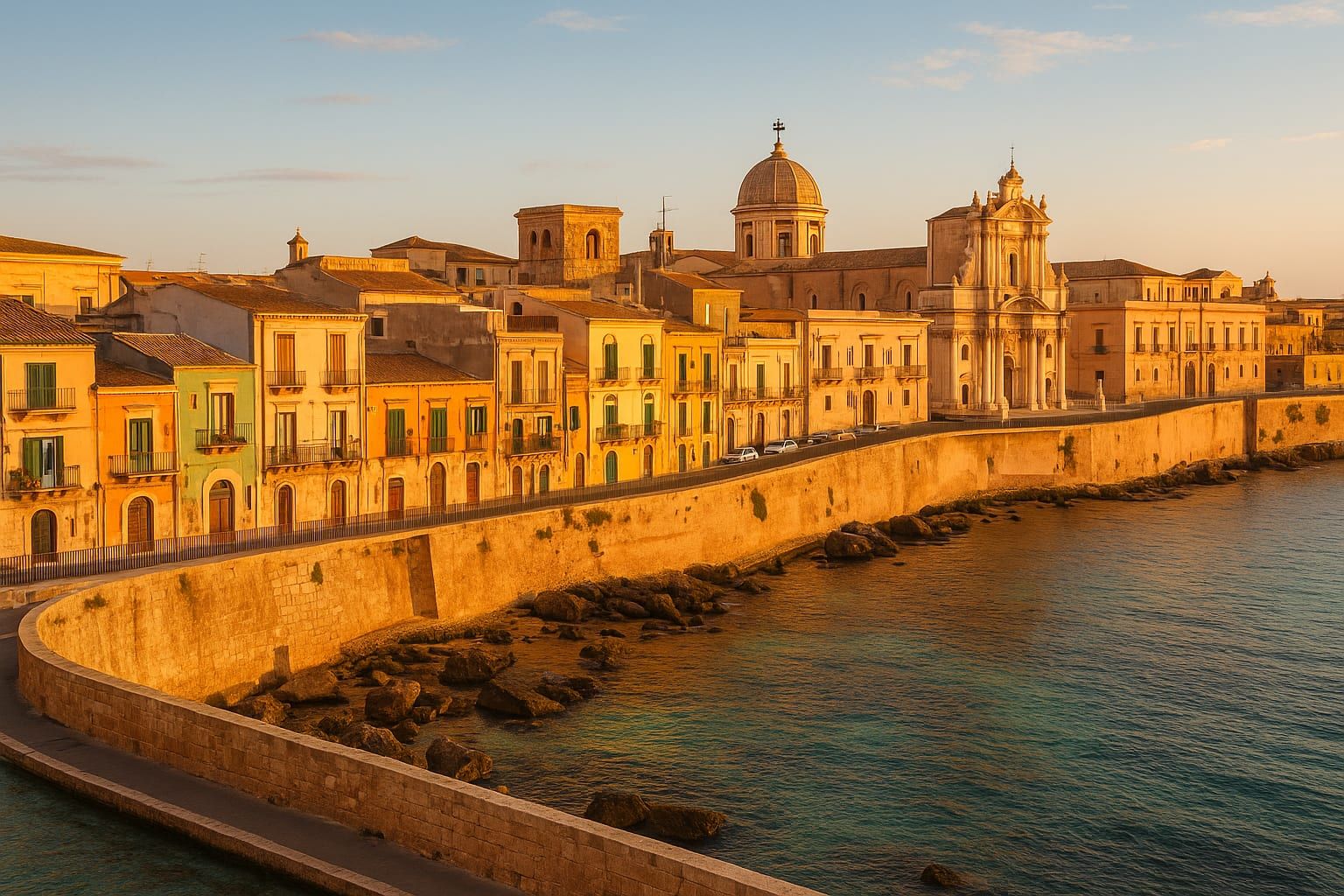
Siracusa: la città antica più bella di Sicilia
Siracusa è la più bella città antica di Sicilia: teatri greci, Ortigia barocca, mercati del pesce e vicoli assolati. Guida su attrazioni, cibo, itinerari e consigli pratici.
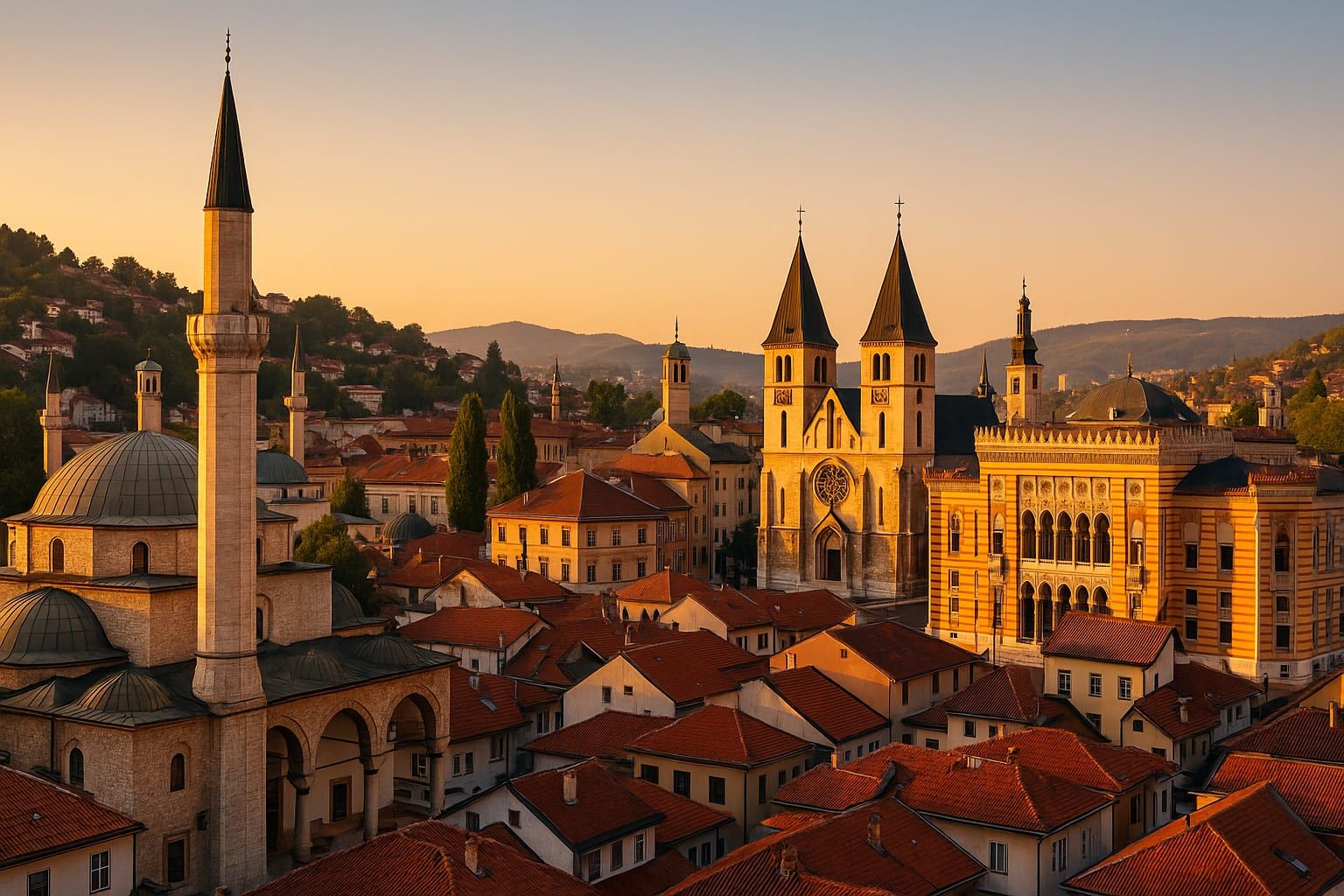
Sarajevo: la Gerusalemme d'Europa da scoprire
Scopri Sarajevo: una capitale compatta e vivace dove moschee, chiese e sinagoghe si affacciano l'una sull'altra, bazar ottomani incontrano viali austro-ungarici e la storia pulsa in ogni via.
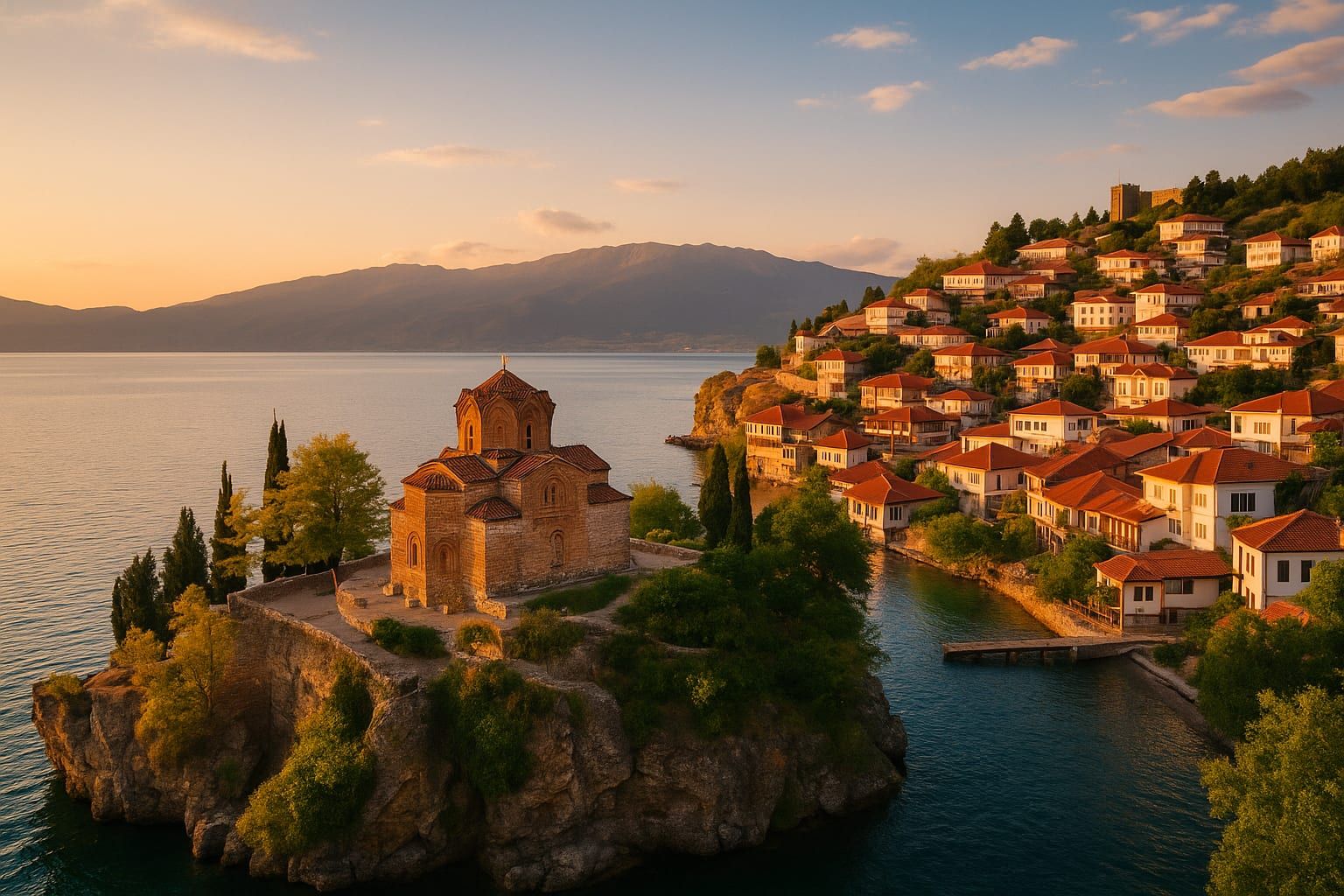
Ohrid: il paradiso lacustre nascosto d'Europa
Scopri Ohrid, Macedonia del Nord — una gemma sul lago dichiarata UNESCO. Dalle acque cristalline e chiese antiche a spiagge nascoste e cucina locale: guida pratica su cosa vedere e fare.